Dogs may have fur coats and natural abilities that help them handle cooler temperatures, but they are not immune to cold weather. Just like humans, dogs can become uncomfortable, develop health problems, or experience dangerous drops in body temperature when exposed to conditions that are too cold.
The temperature a dog can tolerate depends on many factors, including breed, size, age, health, coat type, body condition, and how long the dog is exposed to the cold. A Siberian Husky and a small short-haired dog may experience the same weather very differently.
Understanding your dog’s limits is essential for keeping them safe during colder months.
There is no single temperature that is too cold for every dog
Many people look for a specific temperature number that determines when dogs should stay indoors. However, cold tolerance varies greatly between individual dogs.
Several factors influence how a dog handles cold weather:
- Breed: Northern breeds with thick double coats are generally more comfortable in cold environments than breeds with thin coats.
- Size: Smaller dogs lose body heat faster because they have less body mass.
- Coat type: Thick, dense fur provides more insulation than short or thin coats.
- Age: Puppies and older dogs often have more difficulty regulating body temperature.
- Health: Dogs with certain medical conditions may be more sensitive to cold.
Because of these differences, a temperature that feels manageable for one dog may be unsafe for another.
How different dogs handle cold temperatures
Some dogs were specifically developed to work in freezing environments, while others were bred for warmer climates or indoor companionship.
Cold-weather breeds
Breeds such as Siberian Huskies, Alaskan Malamutes, and other northern working dogs typically have thick double coats designed to provide insulation.
These dogs often tolerate cold better because their bodies are adapted for snowy conditions. However, even cold-weather breeds can become unsafe when exposed to extreme temperatures, strong winds, wet conditions, or prolonged outdoor time.
Small or short-haired dogs
Breeds with small bodies or thin coats usually lose heat more quickly. Dogs such as Chihuahuas, Greyhounds, and many toy breeds may need extra protection during cold weather.
For these dogs, even moderately cool temperatures may become uncomfortable without proper clothing or shorter outdoor exposure.
Signs your dog is too cold
Dogs communicate discomfort through body language. Recognizing early warning signs can prevent more serious problems.
Common signs that a dog may be too cold include:
- Shivering or trembling
- Lifting paws off the ground
- Walking slowly or appearing reluctant to move
- Whining or seeking shelter
- Curling up tightly to preserve heat
- Cold ears, paws, or body surface
- Becoming unusually tired or weak
A dog that wants to go back inside is often communicating a real need, not simply refusing to exercise.
When cold weather becomes dangerous
Prolonged exposure to cold temperatures can lead to hypothermia, a condition where the body loses heat faster than it can produce it.
More serious warning signs include:
- Extreme weakness
- Confusion or unusual behavior
- Slow breathing
- Loss of coordination
- Severe lethargy
Frostbite can also occur, especially on exposed areas such as paws, ears, and the tail. Snow, ice, and freezing surfaces can increase the risk.
Wind, moisture, and wet fur make cold weather worse
Temperature alone does not determine how cold a dog feels. Environmental conditions can significantly change the risk.
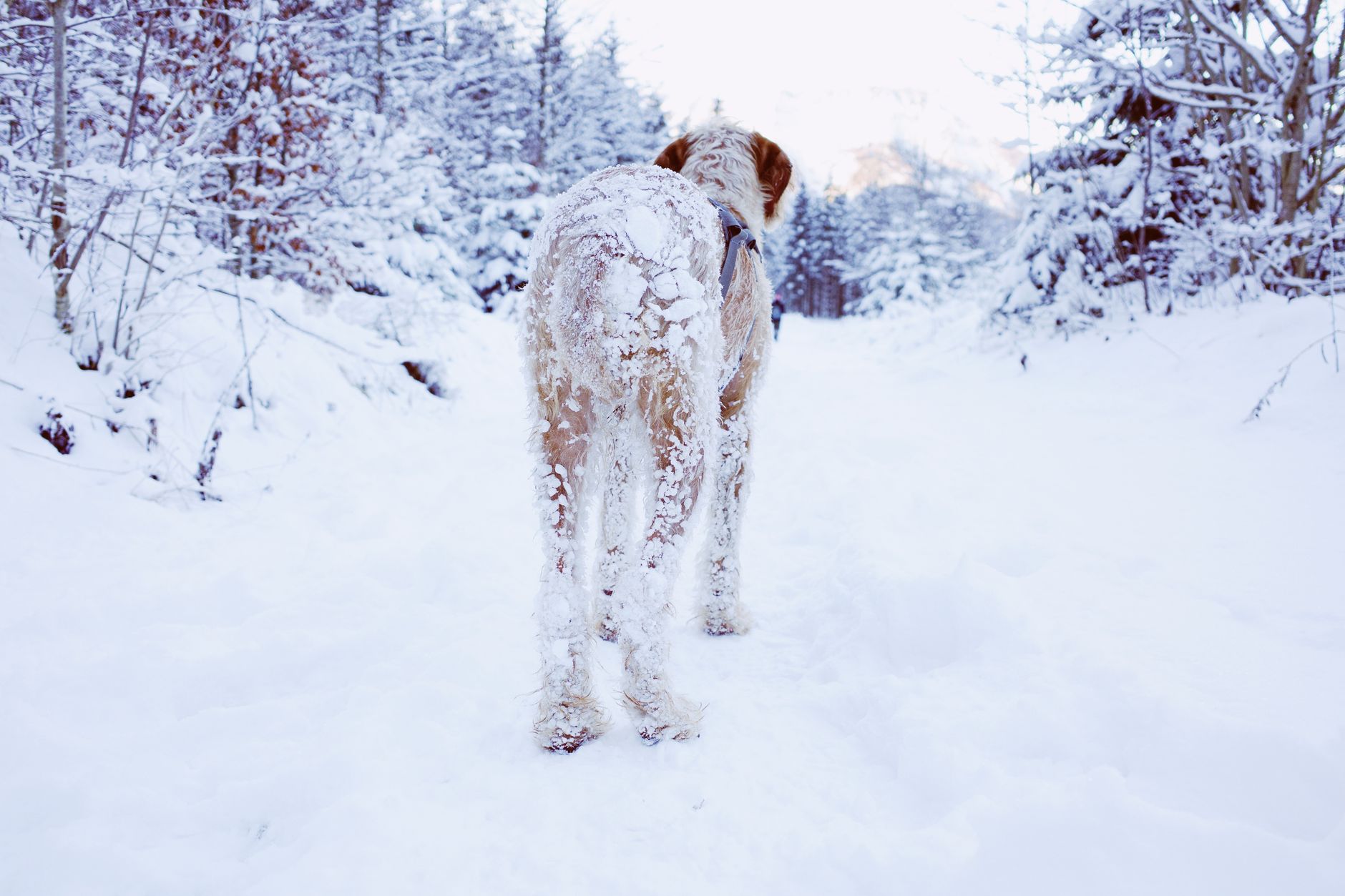
Wind removes heat from the body faster, while wet fur loses much of its insulating ability. A dog that is comfortable in dry cold weather may struggle during rain, snow, or icy conditions.
This is why a mild winter day can become dangerous if a dog is wet and exposed for too long.
How to keep your dog safe in cold weather
Keeping dogs comfortable in winter does not always mean avoiding the outdoors completely. Instead, owners should adjust care based on the dog’s individual needs.
Limit outdoor time when necessary
Short walks and outdoor activities are usually safer than allowing dogs to remain outside for long periods in cold conditions.
Protect vulnerable dogs
Dogs with short coats, small bodies, health problems, or advanced age may benefit from sweaters, jackets, or other protective gear during colder weather.
Check paws after walks
Ice, salt, and chemicals used on roads can irritate or injure paw pads. Cleaning and checking paws after outdoor activity helps prevent problems.
Provide a warm resting area
Dogs spending time indoors should have a comfortable place away from cold drafts. Outdoor dogs require appropriate shelter, although extreme weather may still make outdoor living unsafe.
Do dogs need winter clothing?
Not every dog needs a coat, but many do benefit from extra protection. Clothing can be helpful for dogs that naturally struggle to stay warm.
Winter clothing may be useful for:
- Small dogs
- Short-haired breeds
- Senior dogs
- Dogs recovering from illness
- Dogs exposed to prolonged cold conditions
A coat should fit properly and should not restrict movement or cause overheating.
Can dogs sleep outside in cold weather?
Some dogs can tolerate cooler outdoor conditions better than others, but sleeping outside during cold weather carries greater risks than short outdoor activities.
A dog’s body temperature can drop significantly during long periods of inactivity, especially overnight when temperatures often decrease.
Even breeds adapted to cold climates need proper shelter, protection from wind and moisture, and regular monitoring.
How to know your dog’s personal cold limit
The best guide is your individual dog’s behavior and physical condition. Pay attention to how your dog responds during colder days.
A healthy, active dog that enjoys being outside may tolerate conditions that another dog finds uncomfortable. Owners should avoid comparing their dog with another breed or assuming all dogs handle cold the same way.
The final answer: protect your dog based on their needs, not just the temperature
There is no universal temperature where every dog becomes unsafe. Cold tolerance depends on breed, size, coat, health, and environmental conditions.
The most important rule is to watch your dog’s behavior and respond to signs of discomfort. A dog that is shivering, seeking warmth, or acting unusually tired may already be struggling with the cold.
With proper attention, preparation, and awareness, dogs can enjoy cooler weather safely while avoiding the risks that come with temperatures that are too harsh.
“`