If you are deciding what to feed your dog, the most useful question is not whether one ingredient is “good” or “bad.” The better question is whether the entire diet provides appropriate nutrition for that dog, in the right amount, over time.
For most healthy dogs, a practical starting point is a commercial food labeled complete and balanced for the appropriate life stage. In the United States, that wording indicates that the food is intended to function as the dog’s primary diet and has met an established AAFCO nutrient profile or feeding-trial standard. Treats and snacks generally do not meet the same nutritional requirement.
Everything else—wet versus dry food, homemade recipes, treats, toppers, raw feeding, and human foods—should be considered in relation to that nutritional foundation rather than treated as an independent shortcut to a better diet.
If You Need a Simple Answer, Start Here
For a healthy dog without a veterinary-prescribed diet, a sensible feeding plan usually has four parts:
- Choose a nutritionally complete food appropriate for the dog’s life stage.
- Feed a measured amount that maintains a healthy body condition.
- Keep treats and extras limited so they do not displace balanced nutrition.
- Change the plan when the individual dog gives you a reason, such as growth, weight change, digestive problems, disease, or veterinary advice.
This approach is deliberately less exciting than many feeding trends. That is also its strength: it puts nutritional adequacy and the individual dog ahead of marketing claims.
What “Complete and Balanced” Actually Tells You
A dog does not need one particular ingredient to make a diet healthy. It needs the correct overall supply of essential nutrients.
The nutritional adequacy statement on a dog-food label is therefore more informative than simply scanning the ingredient list for familiar foods. FDA guidance explains that foods carrying a complete-and-balanced claim must either meet an established AAFCO nutrient profile or pass an appropriate feeding trial. Different profiles exist because growing and reproducing dogs have different nutritional requirements from adult dogs maintained at a stable life stage.
That does not mean every complete commercial food will suit every dog equally well. Palatability, calorie density, digestive tolerance, medical conditions, body weight, and individual response still matter. Nutritional adequacy is the starting requirement, not the entire decision.
Feed the Dog You Have, Not the Serving Size Printed on the Bag
Package feeding directions are useful as an initial estimate, but dogs with the same body weight do not necessarily need exactly the same number of calories.
Activity, age, body condition, reproductive status, environment, metabolism, and health can all affect energy requirements. Veterinary nutritional guidance therefore emphasizes individualized assessment rather than treating a feeding chart as an exact prescription.
In practical terms, monitor what happens after you choose the food:
- Is body weight remaining appropriate?
- Can you detect a waist rather than seeing a progressively rounder body shape?
- Is appetite reasonably consistent?
- Are stools generally normal for the dog?
- Is there unexplained weight loss or gain?
- Has muscle condition changed?
If a dog steadily gains weight on the recommended package amount, continuing to feed that amount simply because it appears on the label is not a useful strategy. The feeding quantity needs to match the individual dog.
Puppies Need More Than a Smaller Bowl of Adult Food
Puppies are growing rather than simply maintaining an adult body. Their diet therefore needs to support tissue development and growth while maintaining appropriate nutrient balance.
AAFCO nutrient profiles distinguish growth and reproduction from adult maintenance for this reason.
Large-breed puppies deserve particular attention because excessively rapid or poorly managed growth can create additional nutritional concerns. The practical solution is not to improvise with larger quantities of adult food but to choose a complete diet formulated for the puppy’s appropriate growth stage and size category when relevant.
Once growth is complete, the dog’s nutritional objective changes from development to maintenance. That is when an adult-maintenance diet generally becomes more appropriate.
Dry Food, Wet Food, or Both?
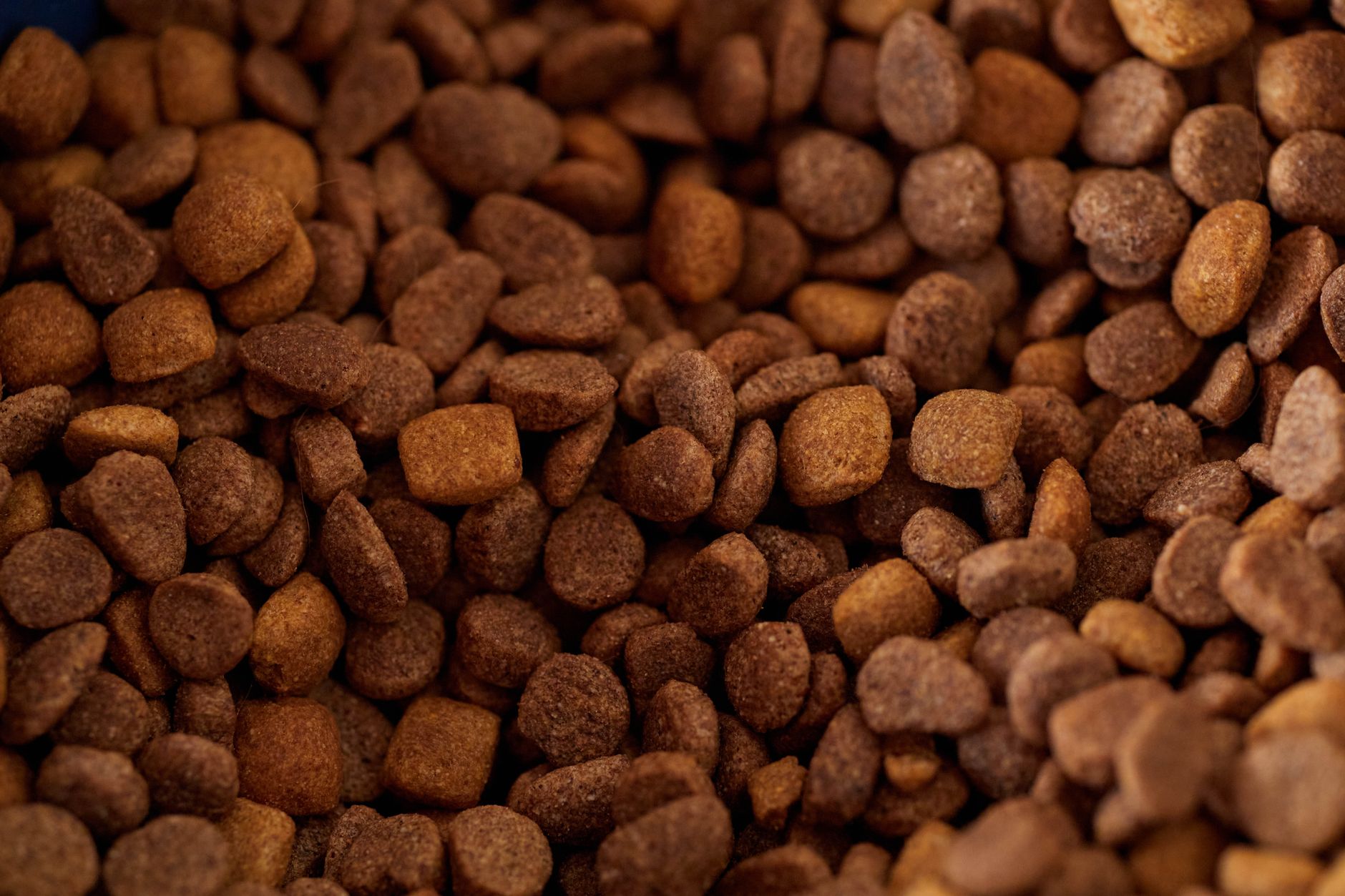
There is no rule that kibble is inherently superior to canned food or that wet food is automatically healthier. Either can function as the main diet when it is nutritionally complete and appropriate for the dog.
| Feeding Option | Why Owners Choose It | Main Limitation to Consider |
|---|---|---|
| Dry food | Easy to store, measure, travel with, and use in training or puzzle feeders | Portions still need measuring because calorie intake can accumulate quickly |
| Wet food | Provides more moisture and can be highly palatable for some dogs | Opened food needs appropriate handling and refrigeration |
| Mixed feeding | Allows owners to combine textures and feeding formats | Calories from both foods must be counted together |
The comparison becomes more complicated when owners evaluate nutrient percentages on wet and dry labels. Because canned foods contain much more moisture, an as-fed protein percentage cannot always be compared directly with the percentage on a dry kibble label. FDA guidance notes that meaningful comparisons between foods with very different moisture levels require conversion to a dry-matter basis.
What Human Foods Can You Feed a Dog?
A number of ordinary foods can be used as occasional extras for healthy dogs when they are safe, plain, and given in sensible portions. The larger nutritional issue is not whether a dog can consume an individual ingredient. It is how much of the overall diet that ingredient replaces.
A small piece of plain cooked food used as a training reward is very different from replacing a large part of a balanced meal every day with leftovers.
Human foods also introduce another complication: recipes may contain ingredients that are unsuitable or toxic to dogs. Highly seasoned foods, sauces, sweets, baked goods, and prepared meals can contain ingredients that are not obvious from their appearance.
For that reason, human food is best treated as an optional extra rather than the foundation of everyday canine nutrition.
Treats Should Stay Small in the Overall Diet
Owners often underestimate treats because each individual piece looks insignificant. The dog, however, experiences the total calories from every training reward, chew, table scrap, dental treat, and snack given by different family members.
A common veterinary nutrition guideline is to keep treats and other nutritionally incomplete extras to roughly 10 percent or less of daily calorie intake, leaving most calories to come from a complete diet.
The principle matters more than the exact shape of the treat: extras should remain extras. When snacks begin replacing a substantial portion of the primary food, they can both increase calorie intake and dilute the balanced nutrient supply.
Homemade Dog Food Is Easy to Make and Hard to Balance
Home cooking gives an owner direct control over ingredients. That can be appealing, particularly when a dog has preferences or the owner wants to avoid particular components.
The difficult part is not producing a meal the dog will eat. It is producing a diet that repeatedly supplies all required nutrients in appropriate amounts.
AAHA notes that studies evaluating home-prepared pet-food recipes from books and websites have found that the majority were not complete and balanced, including recipes attributed to veterinarians. For owners who want homemade food to serve as a long-term primary diet, AAHA recommends working with a board-certified veterinary nutritionist and following the formulated recipe precisely, including prescribed supplements.
This is where homemade feeding differs from occasionally adding a safe cooked ingredient to a balanced commercial meal. The first is responsible for supplying the dog’s complete nutritional requirements; the second is only an addition.
Raw Feeding Has a Different Risk Profile
Raw feeding is sometimes discussed primarily in terms of ingredients or the idea of eating a less processed diet. The more important practical issue is microbial safety.
AAHA states that raw animal-protein diets increase the risk of transmitting bacterial and protozoal pathogens to pets, people, and other animals. Dogs can also shed organisms such as Salmonella without showing obvious illness themselves.
That creates household exposure routes beyond the food bowl. Raw ingredients can contact hands, counters, utensils, flooring, bowls, and other surfaces.
Raw feeding therefore should not be assumed to be healthier simply because the ingredients are uncooked or minimally processed. It introduces food-safety considerations that conventional cooked diets manage differently.
Do Not Assume Grain-Free Means Better
Pet-food marketing can make an omitted ingredient sound like a nutritional advantage even when the individual dog has no medical reason to avoid it.
Current veterinary nutrition guidance has specifically urged caution around unnecessary grain-free diets and diets heavily based on legumes because of continuing investigation into diet-associated dilated cardiomyopathy in dogs. AAHA’s nutrition guidance recommends discussing the advantages and disadvantages of these feeding patterns with a veterinarian rather than assuming that grain-free labeling means superior nutrition.
For most owners, the broader lesson is useful: absence of an ingredient is not proof of nutritional quality.
Medical Conditions Can Override General Feeding Advice
A diet that works well for a healthy adult dog may be inappropriate for another dog with a medical condition.
Kidney disease, diabetes, obesity, gastrointestinal disorders, pancreatitis, urinary problems, food sensitivities, and other conditions can change nutritional priorities. AAHA recommends regular nutritional assessment throughout a dog’s life and specifically recognizes nutrition as part of disease management.
For example, dogs with diabetes may need consistent food amounts and feeding times as part of their medical management. AAHA guidance also notes that dietary strategies can vary depending on whether a diabetic dog needs weight loss, weight maintenance, or weight gain.
This is why a veterinary therapeutic diet should not be substantially modified with random toppers, treats, or table food without considering whether those additions undermine the intended nutritional treatment.
Do Not Keep Switching Foods Without a Reason
Changing diets is useful when there is a clear objective: life-stage transition, poor tolerance, medical need, weight management, product availability, or another practical reason.
Changing simply because a different bag has a more impressive ingredient list is less compelling.
AAHA’s nutrition guidance notes that an apparently healthy animal maintaining an appropriate weight may not require a major diet adjustment unless a nutritional risk factor has been identified.
If the current diet is complete, appropriate for the life stage, well tolerated, and supporting a healthy body condition, stability can be an advantage.
When You Change Food, Watch the Dog Rather Than the Calendar
Many dogs tolerate a gradual transition between diets better than an abrupt replacement. The purpose of mixing old and new food is to give the digestive system time to adapt while allowing the owner to observe appetite and stool quality.
A practical transition can move from mostly old food to progressively more of the new diet over several days.
- Begin with the current food plus a relatively small amount of the new food.
- Increase the new food if the dog continues eating normally and stools remain acceptable.
- Move toward approximately equal portions.
- Continue increasing the new diet.
- Complete the transition once the dog is tolerating it well.
A dog with a history of gastrointestinal sensitivity may need a slower change. Significant vomiting, persistent diarrhea, appetite loss, or another concerning response is a reason to stop treating the transition as a routine feeding issue and seek veterinary guidance.
A Diet Can Be Nutritious and Still Be Fed Poorly
Food quality is only one part of feeding. Storage, measuring, bowl hygiene, and monitoring intake also affect how well a diet works in practice.
Useful habits include:
- measure portions rather than repeatedly filling an apparently empty bowl;
- store dry food according to the manufacturer’s instructions;
- keep identifying information from the original packaging in case of a recall;
- refrigerate opened wet food appropriately;
- wash bowls and food utensils regularly;
- track changes in appetite, weight, stool, and general condition.
A Better Way to Compare Dog Foods
Instead of asking which product has the most appealing front label, work through the questions that have a direct effect on the dog.
| Question | Why It Matters |
|---|---|
| Is it complete and balanced? | The primary diet needs to supply the dog’s essential nutrients. |
| Is it intended for the correct life stage? | Puppies and adult dogs do not have identical nutritional requirements. |
| How calorie-dense is it? | Portion size alone does not tell you how much energy the dog receives. |
| Does the dog maintain a healthy body condition? | The correct food still needs to be fed in the correct quantity. |
| Does the dog tolerate it? | Digestive response, appetite, and general health are practical indicators that matter. |
| Does the dog have a medical condition? | Disease can change nutrient and feeding requirements. |
| How much of the diet comes from treats and extras? | Large amounts of nutritionally incomplete food can dilute an otherwise balanced diet. |
What Should You Feed Your Dog Today?
If your dog is healthy and you are simply trying to make a sensible everyday choice, the answer does not need to be complicated: choose a complete and balanced diet appropriate for the dog’s life stage, measure the amount, monitor body condition, and keep treats secondary.
Wet food, dry food, or a combination can all work. Home-prepared feeding can also be done appropriately, but it requires much more nutritional precision than assembling foods that merely look healthy. Raw feeding carries additional pathogen risks. Dogs with medical problems may need an entirely different plan.
The useful standard is not whether a diet is fashionable, expensive, natural-sounding, meat-heavy, grain-free, or visually appealing. It is whether the food reliably meets the nutritional needs of the individual dog while remaining safe, practical, and sustainable to feed.