Dog anxiety is one of the most common behavioral concerns faced by pet owners, but it is also one of the most misunderstood. An anxious dog is not simply being difficult, stubborn, or overly dramatic. Anxiety is an emotional response that can influence how a dog reacts to people, other animals, unfamiliar environments, daily routines, and periods of separation. Understanding what drives anxiety is essential because the most effective solutions focus on changing the dog’s emotional state rather than only trying to suppress visible behaviors.
Dogs communicate stress in many different ways. Some become vocal, destructive, or restless, while others withdraw, freeze, or avoid interaction. Because anxiety can appear differently from one dog to another, identifying the underlying cause requires careful observation. A dog that barks continuously when left alone, for example, may not be acting out intentionally; it may be experiencing distress caused by separation, fear, or uncertainty.
Why Some Dogs Develop Anxiety
There is rarely a single reason why a dog becomes anxious. Behavior is shaped by genetics, early experiences, environment, health, training history, and daily routine. Some dogs are naturally more sensitive or reactive, while others develop anxiety after stressful experiences or major changes in their lives.
Rescue dogs, dogs with limited socialization during puppyhood, and animals that have experienced unpredictable environments may have a higher likelihood of fear-related behaviors. However, anxiety can also develop in dogs that have always lived in stable homes. Changes that seem minor to people, such as moving furniture, introducing a new family member, changing schedules, or hearing unfamiliar noises, can affect some dogs significantly.
Common Types of Anxiety in Dogs
Separation-Related Anxiety
Separation anxiety occurs when a dog experiences significant distress when separated from a person or people it is strongly attached to. Signs may include barking, whining, pacing, scratching doors, destructive behavior, house soiling, or attempts to escape.
This condition is different from simple boredom. A bored dog may chew an object because it needs stimulation, while a dog experiencing separation anxiety may panic because it cannot cope with being alone. Successful management usually involves gradual behavior modification rather than simply increasing exercise before leaving the house.
Fear and Noise Anxiety
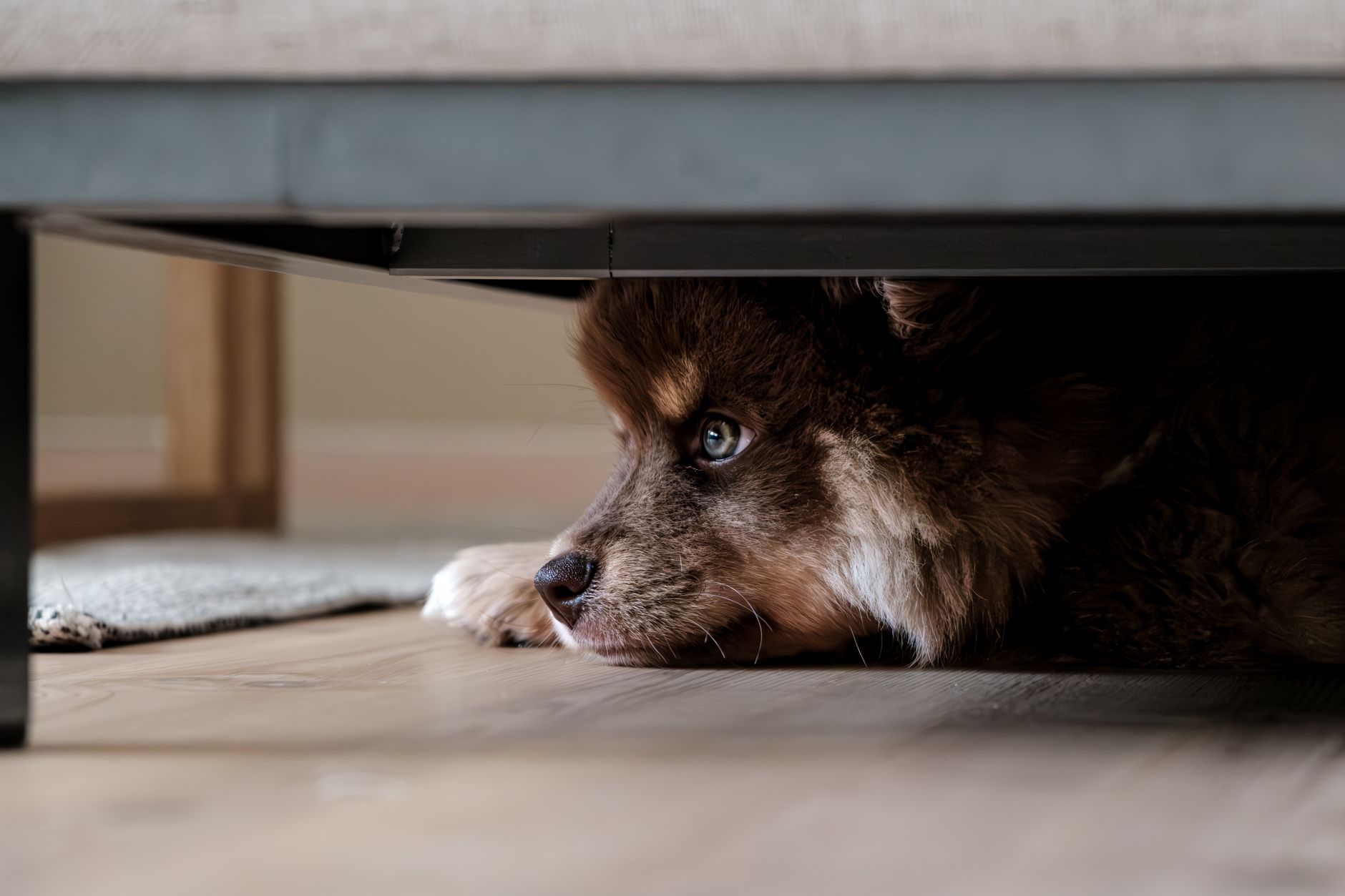
Many dogs experience fear responses to specific sounds or situations. Thunderstorms, fireworks, construction noise, traffic, alarms, or unfamiliar environments can trigger anxiety. Some dogs may attempt to hide, tremble, pace, bark, or seek constant reassurance.
Noise sensitivity can become more challenging because the trigger is often unavoidable. Management may involve creating a safe resting area, using gradual exposure techniques, and reducing the intensity of stressful experiences whenever possible.
Social Anxiety
Some dogs become nervous around unfamiliar people, children, or other animals. This may happen because of limited early socialization, negative experiences, or individual temperament.
A socially anxious dog should not be forced into interactions that create fear. Flooding a dog with overwhelming situations can increase stress and make reactions stronger. Controlled exposure paired with positive experiences is generally a more effective approach.
Age-Related Anxiety
Older dogs can experience changes that affect behavior. Cognitive decline, reduced senses, discomfort from health problems, or changes in mobility can contribute to confusion and anxiety.
New anxiety symptoms in senior dogs should not automatically be considered a normal part of aging. A veterinary evaluation can help identify medical factors that may be influencing behavior.
Signs Your Dog May Be Experiencing Anxiety
Anxiety does not always look like obvious fear. Some dogs show subtle signals that are easy to overlook. Learning these signs allows owners to respond earlier before stress becomes more severe.
- Excessive barking, whining, or vocalization.
- Pacing or inability to settle.
- Repeated licking, chewing, or other repetitive behaviors.
- Hiding or avoiding people or situations.
- Destructive behavior when stressed.
- Changes in appetite or sleep patterns.
- Trembling, panting, or restlessness without obvious physical activity.
- Sudden changes in behavior or temperament.
How to Help an Anxious Dog Feel Safer
Create Predictability Through Routine
Dogs often feel more secure when they understand what happens next. Consistent feeding times, walks, training sessions, and rest periods can reduce uncertainty. A predictable environment does not eliminate all anxiety, but it can provide a foundation of stability.
For dogs that struggle with changes, introducing new experiences gradually can prevent unnecessary stress. Small adjustments are usually easier for anxious dogs to process than sudden major changes.
Use Positive Reinforcement Training
Training can help dogs develop confidence by teaching them that calm behavior leads to positive outcomes. Rewarding relaxed behavior, engagement, and appropriate coping responses helps replace fearful reactions with more useful behaviors.
Punishment is generally not an effective approach for anxiety because it may increase fear. If a dog is already stressed, adding another negative experience can make the emotional response stronger.
Provide Physical and Mental Enrichment
Exercise and enrichment support overall well-being, but they should be matched to the individual dog. Activities such as scent games, training exercises, puzzle feeders, and appropriate play can help reduce frustration and build confidence.
Mental stimulation is especially valuable because it encourages problem-solving and gives dogs a constructive way to use their natural abilities.
Create a Safe Space
An anxious dog benefits from having a place where it can retreat without being disturbed. This might be a quiet room, crate if properly introduced, or comfortable resting area away from household activity.
A safe space should not be used as punishment. The goal is to create an area associated with relaxation and security.
When Professional Help May Be Needed
Some anxiety cases improve with environmental changes and training, but others require professional support. Severe anxiety can affect a dog’s quality of life and may become worse without appropriate intervention.
A veterinarian can help determine whether medical issues contribute to the behavior and discuss possible treatment options. In some cases, working with a qualified veterinary behavior professional or experienced trainer may be appropriate, especially when anxiety involves aggression, panic, or severe distress.
| Situation | Recommended Action |
|---|---|
| Mild nervousness during specific events | Use gradual training, environmental management, and positive reinforcement. |
| Frequent anxiety affecting daily life | Discuss the behavior with a veterinarian or qualified professional. |
| Sudden anxiety changes | Consider a veterinary evaluation to rule out health problems. |
| Panic, self-injury, or aggression | Seek professional behavioral support promptly. |
What Not to Do With an Anxious Dog
Many common reactions can unintentionally make anxiety worse. Telling a frightened dog to “stop,” forcing interaction, or exposing the dog to overwhelming situations may increase fear rather than resolve it.
It is also important to avoid giving calming supplements, medications, or human products without veterinary guidance. Products that are safe for people may not be safe for dogs, and anxiety treatment should consider the individual animal’s health and circumstances.
Helping an Anxious Dog Takes Time and Consistency
Anxiety is not usually solved through a single trick or quick fix. Dogs learn emotional responses over time, and changing those responses requires patience, consistency, and careful management.
The most successful approach combines understanding the cause of anxiety, reducing unnecessary stress, teaching healthier coping skills, and seeking professional help when needed. When owners focus on building trust and confidence, anxious dogs can often become more comfortable and better equipped to handle everyday situations.
“`