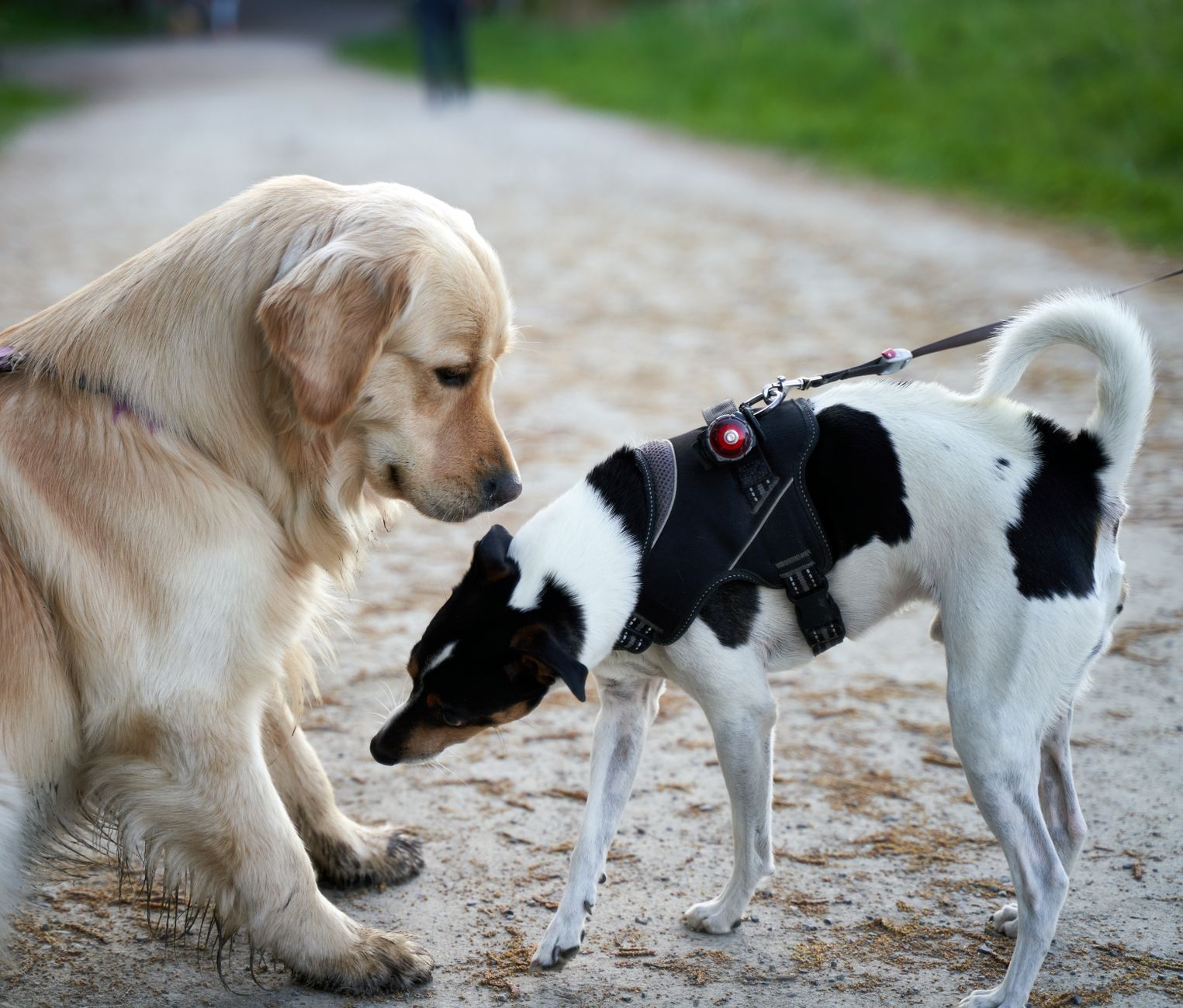
Seeing your dog bark at another dog during a walk can be frustrating, especially when the behavior seems sudden or difficult to control. However, barking at other dogs is rarely just a simple obedience problem. Dogs vocalize for many reasons, including excitement, fear, frustration, uncertainty, or a desire to interact.
Learning how to stop your dog from barking at other dogs requires understanding what is driving the reaction. A dog that barks because it wants to play needs a different approach from a dog that barks because it feels threatened. Effective training focuses on changing the emotional response behind the behavior rather than only trying to silence the noise.
The goal is not necessarily to make a dog ignore every other animal. A realistic goal is teaching your dog that seeing another dog does not require an intense reaction and that calm behavior leads to positive outcomes.
Why Dogs Bark at Other Dogs
Dogs communicate through body language and vocal signals. Barking is one part of that communication system, and it can mean different things depending on the situation.
| Reason for Barking | What the Dog May Be Feeling |
|---|---|
| Excitement | The dog wants to greet, play, or interact. |
| Fear or insecurity | The dog feels uncomfortable and wants distance. |
| Frustration | The dog cannot reach another dog because of a leash or barrier. |
| Territorial behavior | The dog is responding to another animal entering its perceived space. |
| Learned habit | The dog has practiced the behavior and it has become automatic. |
Identifying the reason behind the barking is one of the most important steps. Treating every barking dog the same can make training slower or even increase stress.
Recognize Your Dog’s Body Language Before Barking Starts
Many owners notice barking only after it begins, but dogs usually show warning signs before they react. Learning to recognize these signals allows you to intervene earlier.
Signs that a dog may be becoming overstimulated include:
- Staring intensely at another dog
- Freezing or becoming stiff
- Raising the tail or holding the body tensely
- Pulling toward the other dog
- Whining or making small vocalizations
- Ignoring previously familiar commands
Training is usually easier before a dog reaches the point where barking, lunging, or pulling has already started. Once a dog becomes highly aroused, learning becomes much more difficult.
Increase Distance to Reduce Reactivity
One of the most practical techniques for dogs that bark at other dogs is managing distance. Many dogs react because another dog is simply too close for them to remain calm.
Distance creates an opportunity for your dog to think instead of immediately reacting. During walks, this may mean crossing the street, moving behind a parked car, or creating more space on a wider path.
This is not avoiding the problem forever. It is creating conditions where your dog can succeed while learning a new response.
Reward Calm Behavior Around Other Dogs
Dogs repeat behaviors that produce rewarding outcomes. If a dog learns that barking makes another dog disappear, the barking may become stronger because the dog believes the strategy works.
Instead, reward moments of calmness. When your dog notices another dog but remains relaxed, provide positive reinforcement.
Rewards can include:
- Small training treats
- Praise
- A favorite toy
- Permission to continue walking
The timing of the reward matters. The goal is to communicate that calm observation, not barking, is the behavior you want to encourage.
Teach an Alternative Behavior
Simply telling a dog what not to do is often less effective than teaching what to do instead. A dog that has a clear alternative behavior has something productive to focus on.
Useful replacement behaviors include:
- Looking at the owner when called
- Walking calmly beside the owner
- Sitting while another dog passes
- Turning away on a cue
- Checking in with the owner during walks
These skills should be practiced in low-distraction environments first. Expecting perfect behavior around exciting triggers before the skill is established can create frustration.
Use Desensitization and Counterconditioning
Many dogs that bark at other dogs are reacting emotionally rather than intentionally misbehaving. Desensitization and counterconditioning are commonly used approaches that focus on changing how the dog feels about the trigger.
The process involves exposing the dog to another dog at a manageable distance while creating positive associations. Over time, the dog learns that seeing another dog predicts something good rather than stress or excitement.
A simplified example:
- Your dog notices another dog from a comfortable distance.
- You reward your dog for remaining calm.
- You repeat the process consistently.
- You gradually decrease the distance only when your dog can stay relaxed.
This process requires patience because emotional responses do not usually change overnight.
Avoid Punishment-Based Responses
When a dog barks repeatedly, it can be tempting to respond with punishment. However, punishment may increase fear, frustration, or uncertainty, especially if the barking is caused by anxiety.
A dog that already feels uncomfortable around other dogs may learn that seeing another dog predicts additional stress from the owner. This can make the reaction stronger rather than weaker.
Clear communication, reward-based training, and appropriate management generally create more reliable long-term results.
Practice in Controlled Situations
Training is most successful when you can control the difficulty level. Busy sidewalks, crowded parks, or dog-heavy areas may be too challenging for a dog that is still learning.
Start with environments where your dog can focus. Gradually introduce more distractions as your dog becomes more comfortable.
| Training Stage | Example Environment |
|---|---|
| Beginner | Quiet area where dogs are visible but far away. |
| Intermediate | Places with occasional dogs passing at a manageable distance. |
| Advanced | More distracting environments with careful supervision. |
Consider Your Dog’s Exercise and Enrichment Needs
A dog with excess energy may have more difficulty controlling reactions. Regular exercise and mental stimulation support better behavior because the dog is less likely to be overwhelmed by everyday experiences.
Helpful activities may include:
- Daily walks appropriate for the dog’s health
- Training games
- Food puzzles
- Play sessions
- Safe social experiences
Exercise alone will not fix reactivity, but meeting a dog’s physical and mental needs creates a stronger foundation for training.
Know When Professional Help Is Needed
Some dogs have mild excitement-based barking that improves with consistent training. Others have intense reactions involving fear, aggression, or panic.
Professional guidance may be helpful if your dog:
- Lunges aggressively toward other dogs
- Cannot recover after seeing another dog
- Has bitten another animal
- Shows extreme fear responses
- Becomes difficult to control on walks
A qualified trainer or veterinary behavior professional can help identify the cause and create a plan suited to your dog’s individual needs.
Building Better Walks Through Communication
Understanding how to stop your dog from barking at other dogs is not about eliminating natural communication. Dogs will always notice other animals, and some level of interest is normal.
The goal is to teach your dog that another dog appearing does not automatically mean excitement, fear, or conflict. Through distance management, positive reinforcement, and consistent practice, many dogs can learn to respond more calmly.
Successful training takes time, but every calm interaction is a step toward a dog that feels more confident and a walking experience that is more enjoyable for both owner and pet.