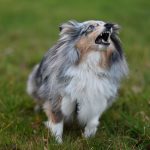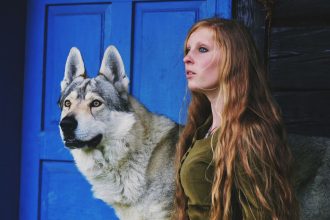
The phrase “what type of dog is my dog?” can mean several different things. You might be trying to identify a breed, understand whether a dog is mixed, work out which breed group its traits resemble, or decide what type of dog would fit your own lifestyle.
Those questions need different methods. Appearance can provide clues about ancestry, but it cannot reliably identify every mixed-breed dog. Behavior can help describe the individual, but it is not proof of breed. And choosing a dog for yourself requires a different process again: matching the dog’s likely needs to the life you actually live.
A useful approach is to separate identity, ancestry, behavior, and suitability instead of treating “dog type” as one simple label.
First Decide What You Mean by “Type”
| If You Want to Know… | The Best Starting Point |
|---|---|
| What breed is my dog? | Look at documented ancestry first, then physical traits and DNA testing if needed |
| Is my dog mixed-breed? | Consider pedigree information, shelter history, and genetic testing |
| What breed group does my dog resemble? | Compare structure, coat, movement, and broad behavioral tendencies |
| What kind of personality does my dog have? | Observe the individual dog’s behavior rather than relying on appearance |
| What type of dog is right for me? | Start with lifestyle, activity, grooming, size, training, and household constraints |
This distinction prevents a common mistake: assuming that a dog that looks like a particular breed must also behave exactly like that breed.
If You Want to Identify Your Dog, Start With Evidence Rather Than Resemblance
The strongest breed information comes from records.
If the dog came from a breeder with documented parentage, registration or pedigree information may provide a clear answer. If the dog was adopted, previous veterinary records, surrender information, or known parentage may also be useful.
When no reliable history exists, identification becomes probabilistic rather than certain.
You can examine:
- adult size;
- body proportions;
- head shape;
- ear shape and carriage;
- tail shape and carriage;
- coat length and texture;
- color and markings;
- leg length;
- overall build;
- movement.
These features can narrow possibilities, but they are not definitive by themselves.
Why Appearance Can Be Misleading in Mixed-Breed Dogs
Mixed-breed dogs do not inherit visible traits in neat percentages.
A dog with ancestry from several breeds may strongly resemble only one of them. Another dog may inherit a coat from one ancestral line, body shape from another, and facial features that do not closely resemble any single breed.
This is why visual identification becomes increasingly uncertain as ancestry becomes more complex.
Two dogs that look similar may have different ancestry. Two dogs from the same mixed-breed litter can also look surprisingly different because each puppy receives a different combination of genetic variants.
Coat Color Is Usually a Weak Identifier
Color attracts attention, but it often provides less information than body structure.
Black, white, tan, brindle, brown, merle, spotted, and other patterns occur across multiple unrelated breeds. A black dog is therefore not necessarily related to another black dog, and a spotted coat does not automatically identify a particular breed.
When evaluating appearance, structural traits such as proportions, coat type, head shape, and adult size are generally more useful than color alone.
Ears and Tails Can Offer Clues, but They Are Not Proof
Ear carriage is often one of the first traits people notice.
Dogs may have:
- upright ears;
- drop ears;
- semi-pricked ears;
- rose-shaped ears;
- large mobile ears;
- small folded ears.
Tail characteristics can also vary considerably, including long straight tails, curled tails, feathered tails, naturally short tails, and different resting positions.
These characteristics can help narrow a visual description, but many breeds share them. They should be treated as pieces of evidence rather than final answers.
Body Proportions Often Tell You More
Look at how the dog’s body is assembled rather than focusing only on the face.
Useful questions include:
- Is the body long relative to the legs?
- Are the legs unusually short or long?
- Is the chest broad or narrow?
- Is the dog lightly built or heavily muscled?
- Is the muzzle relatively short, medium, or long?
- Does the dog have a square outline or a more elongated body?
- Is the adult size toy, small, medium, large, or giant?
These traits often reflect inherited skeletal structure and can make broad breed-group comparisons more informative.
Breed Groups Can Be More Useful Than Guessing One Exact Breed
If exact ancestry is unknown, it may be more practical to describe a dog by broad type rather than forcing a precise breed label.
| Broad Type | Historical Role | Traits You May Commonly Encounter |
|---|---|---|
| Herding or pastoral | Moving and controlling livestock | High responsiveness to movement, trainability, activity, and environmental awareness |
| Sporting or gundog | Finding, flushing, or retrieving game | Active, often social, frequently motivated by carrying, retrieving, or searching |
| Hound | Tracking or pursuing prey | Strong scent or visual tracking tendencies, independence, persistence |
| Terrier | Vermin control | Persistence, digging, chasing, energetic behavior |
| Working | Guarding, pulling, protection, rescue, and other tasks | Strength, confidence, substantial exercise or training needs in some breeds |
| Toy or companion | Companionship or smaller specialized roles | Small size, but widely varying grooming, exercise, and temperament needs |
These are broad tendencies rather than behavioral guarantees.
Behavior Should Not Be Used as a Breed Test
Owners often make conclusions such as:
“My dog loves water, so it must be a retriever.”
Or:
“My dog herds other dogs, so it must be part Border Collie.”
Those observations can be interesting, but behavior alone cannot establish ancestry.
Many behaviors appear across breeds and mixed-breed dogs because they are influenced by:
- genetics;
- learning history;
- early social experience;
- training;
- environment;
- age;
- individual personality.
A dog that retrieves objects does not automatically have retriever ancestry, just as a dog that digs does not automatically have terrier ancestry.
The Individual Dog Matters More Than the Breed Label for Daily Life
Once you already own the dog, practical management should be based on the animal in front of you.
Ask:
- How much exercise does this dog actually need?
- How quickly does it become overstimulated?
- Does it enjoy training?
- How does it respond to strangers?
- How does it behave around other dogs?
- Does it chase small animals?
- Can it settle indoors?
- How much grooming does its actual coat require?
These observations are more useful for care and training than arguing over whether the dog is 20 percent or 30 percent of a particular breed.
DNA Testing Can Provide More Information, With Limits
Commercial canine DNA tests can estimate breed ancestry using genetic markers and reference populations.
This can be useful when:
- the dog’s history is completely unknown;
- visual identification is ambiguous;
- several breeds may be involved;
- owners want more information about ancestry.
However, DNA results should not be treated as a perfect reconstruction of every ancestor.
Results can vary because companies may use different:
- reference databases;
- genetic markers;
- statistical models;
- thresholds for reporting ancestry.
Very small ancestry percentages deserve especially cautious interpretation.
DNA Ancestry Is Not a Personality Prediction
Even if testing identifies several ancestral breeds, it cannot tell you exactly how your individual dog will behave.
Knowing that a dog has ancestry from a herding breed may provide useful context. It does not guarantee that the dog will have intense herding behavior.
The relationship between genetics and behavior is complex, and individual variation within breeds is substantial.
Use ancestry information as background, not as a replacement for observing the dog.
Shelter Breed Labels Should Often Be Treated as Estimates
Dogs entering shelters frequently arrive without pedigrees or reliable parentage information. Staff may need to describe the dog based primarily on appearance.
That label can be useful for basic communication, but it may not represent confirmed genetic ancestry.
If exact breed identity matters to you, ask whether the label is based on:
- known parents;
- previous records;
- DNA testing;
- visual estimation only.
An estimated label should not be interpreted as a genetic test result.
If You Are Choosing a Dog, Reverse the Question
Instead of asking, “What type of dog do I want?” begin with:
“What type of dog can my daily life realistically support?”
This produces a much better shortlist.
Choose by Energy Before Appearance
Exercise mismatch is one of the most important compatibility problems.
Think about your real routine rather than your ideal future routine.
| Your Lifestyle | Look For |
|---|---|
| Frequent hiking, running, training, or outdoor activity | A physically capable dog with an activity level that matches your routine |
| Regular walks and moderate activity | A dog comfortable with consistent but not extreme exercise |
| Mostly quiet home life | An individual with reliably manageable exercise requirements |
| Strong interest in dog sports or advanced training | A dog that enjoys frequent structured learning and engagement |
Do not choose a highly active dog because you hope it will force you to become more active. The dog’s needs will continue even when your motivation does not.
Small Does Not Automatically Mean Easy
Small dogs can be physically easier to transport and handle, but size does not determine:
- energy level;
- vocalization;
- trainability;
- grooming requirements;
- confidence;
- prey drive;
- need for mental stimulation.
A small working-type dog can require far more engagement than a much larger but calmer individual.
Large Dogs Bring Different Practical Requirements
A large dog may be calm and easygoing, but adult size still affects everyday logistics.
Consider:
- leash strength;
- vehicle space;
- food consumption;
- housing restrictions;
- boarding arrangements;
- ability to physically assist the dog when injured or elderly.
Temperament and exercise needs should therefore be considered separately from size.
Coat Type Can Change the Ownership Experience
Two dogs with similar personalities can require very different amounts of maintenance.
Think realistically about whether you want to manage:
- heavy seasonal shedding;
- frequent brushing;
- professional clipping;
- mat prevention;
- regular coat trimming;
- specialized skin or coat care.
A dog described as low shedding may still require extensive professional grooming.
Your Household Changes Which Dog Type Makes Sense
A dog does not live in isolation. Compatibility must include everyone and everything already in the home.
Important factors include:
- young children;
- older adults;
- cats;
- small animals;
- other dogs;
- frequent visitors;
- shared apartment spaces;
- noise-sensitive neighbors.
A dog with intense chasing behavior, for example, may require substantially more management in a home containing small animals.
Age Can Be More Important Than Breed
If predictability matters, an adult dog can sometimes be easier to evaluate than a puppy.
With an adult, you may already know:
- final body size;
- coat characteristics;
- general activity level;
- some social preferences;
- basic behavioral tendencies;
- how easily the dog settles.
A puppy offers less certainty because both physical and behavioral traits are still developing.
A Breed Quiz Can Be Useful, but Only as a Starting Point
Online quizzes asking “what type of dog are you?” or “which dog breed matches your personality?” are mostly entertainment when they compare human personality with canine stereotypes.
A selection quiz can be more useful when it asks practical questions about:
- daily activity;
- home size;
- grooming tolerance;
- training interest;
- children and pets;
- desired adult size;
- time spent away from home.
Even then, a quiz should produce candidates rather than one supposedly perfect answer.
“What Dog Would I Be?” Is a Different Question Entirely
Personality comparisons between people and dog breeds can be entertaining, but they should not be confused with real canine behavior science.
Calling an energetic person a Border Collie, a social person a Labrador, or an independent person a sighthound is a metaphor, not a diagnostic classification.
There is no scientific test that determines which dog breed a human “would be.”
For entertainment, such comparisons are harmless. For choosing an actual dog, lifestyle compatibility matters far more than personality symbolism.
Do Not Choose a Dog Because You Think You Share a Personality
A human who describes themselves as energetic may still be unable to provide several hours of daily activity and structured training.
Likewise, someone who identifies as calm may still enjoy caring for a more active dog.
The better questions are operational:
- How much time can I dedicate every day?
- How much exercise can I consistently provide?
- How much training do I enjoy?
- What grooming am I willing to maintain?
- What size can I safely handle?
- Which behaviors would be difficult in my home?
A Better Way to Identify the Right Dog Type for You
- Define your maximum acceptable activity level.
- Set a realistic adult size range.
- Decide how much grooming you will maintain.
- List every person and animal the dog must live with.
- Decide whether you want casual training or a serious training hobby.
- Identify behaviors you cannot easily manage, such as intense vocalization or chasing.
- Research health concerns associated with breeds on your shortlist.
- Meet adult examples when possible.
- Evaluate the actual individual dog.
This process usually produces a more reliable match than beginning with photographs of breeds you find attractive.
If You Already Have the Dog, Use Type as Context Rather Than a Rulebook
Knowing ancestry can be interesting and sometimes useful, but the dog’s current behavior should guide day-to-day care.
If your dog needs more exercise than expected, provide appropriate activity regardless of the breed label. If the dog has a coat that mats easily, grooming is necessary even if that coat seems unusual for its presumed ancestry. If the dog is uncomfortable around strangers, training should address that individual response rather than relying on what the breed is “supposed” to be like.
The label describes ancestry. It does not override the animal in front of you.
The Most Accurate Answer May Be Broader Than One Breed Name
Sometimes the best description of a dog is not a precise breed at all.
You may have a medium-sized mixed-breed dog with a short coat, athletic build, moderate energy, strong interest in scent, and a social temperament. That description can be more useful for daily life than an uncertain guess involving three or four breed names.
If you want to know what type of dog you have, combine history, physical traits, genetic information when useful, and direct observation of the individual. If you want to know what type of dog is right for you, reverse the process: start with your lifestyle and choose a dog whose normal needs fit it.
Dog type is most useful when it helps you understand and care for the dog—not when it becomes a label that tries to explain everything.