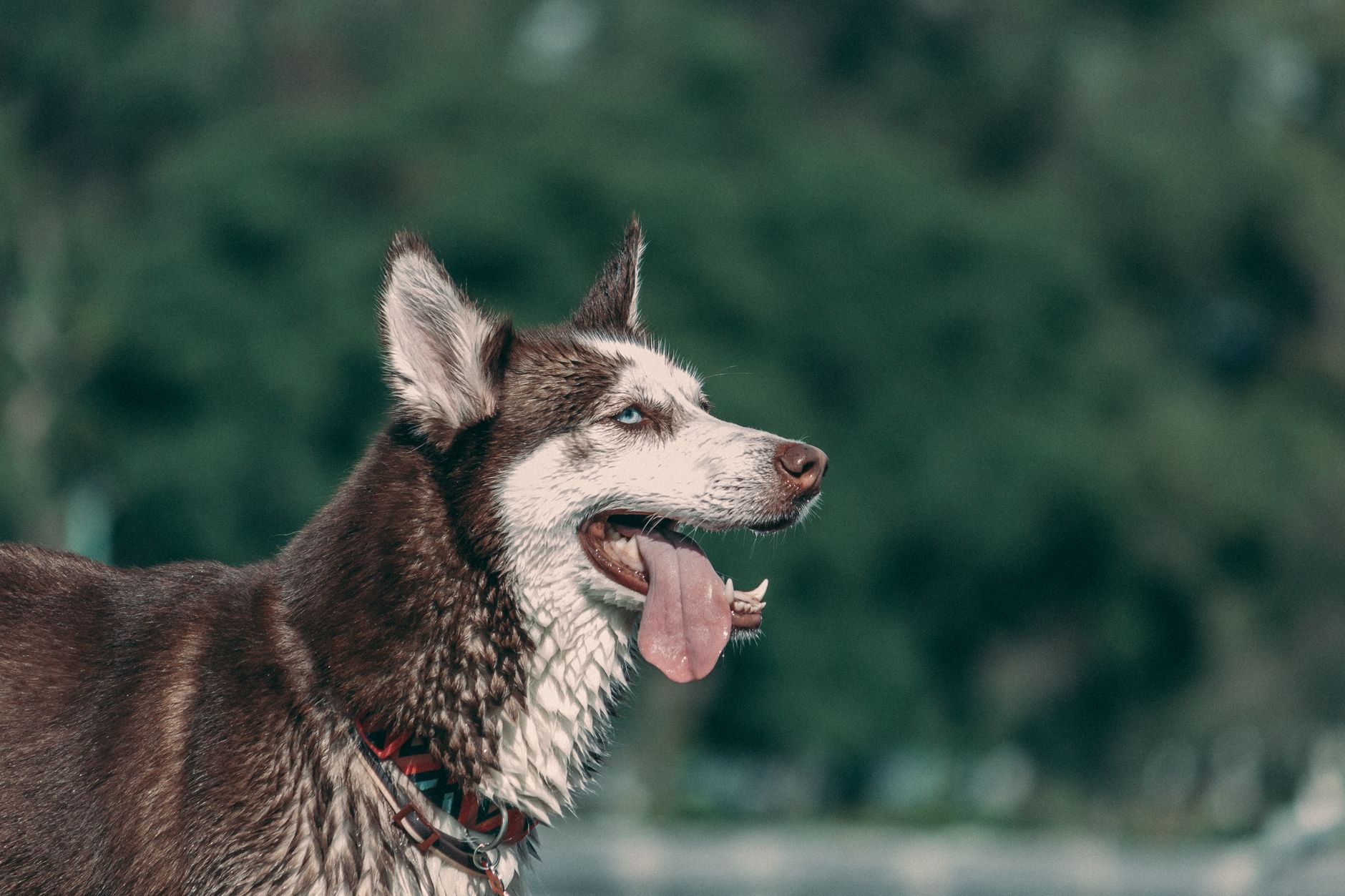
From tiny companion breeds carried in human homes to large working dogs bred for protection and sport, all domestic dogs share a remarkable evolutionary story. Their diverse appearances can make them seem unrelated, but every modern dog traces its ancestry back to ancient wolf populations.
The statement that all dogs are descendants of wolves is broadly correct, but the scientific details are more nuanced. Dogs did not descend from today’s gray wolves living in the wild. Instead, domestic dogs evolved from ancient wolf populations that existed thousands of years ago, before becoming a distinct lineage shaped by domestication.
The Shared Origin of Dogs and Wolves
Domestic dogs (Canis familiaris) and gray wolves (Canis lupus) belong to the same biological family and genus. Their close genetic relationship indicates that dogs originated from ancient wolf ancestors rather than from another canid species.
Scientists continue to investigate exactly when and where this transformation occurred. Genetic research suggests that dog domestication happened at least many thousands of years ago, although the precise geographic origin remains debated. Different studies have proposed multiple regions, including parts of Eurasia, as possible centers of early domestication.
| Animal | Scientific Name | Evolutionary Relationship |
|---|---|---|
| Domestic dog | Canis familiaris | Domesticated lineage derived from ancient wolf populations |
| Gray wolf | Canis lupus | Closest living wild relative of domestic dogs |
| Coyote | Canis latrans | Related canid species but not a direct ancestor of dogs |
Dogs Did Not Come From Modern Wolves
A common misconception is that dogs evolved from the wolves that exist today. Modern gray wolves and domestic dogs are better understood as evolutionary cousins that share an older common ancestor.
Thousands of years ago, some wolf populations began living closer to human settlements. These early relationships likely developed gradually, with less fearful wolves gaining advantages by accessing food resources near human groups. Over generations, natural and human-driven selection favored animals that were more tolerant, cooperative, and easier to manage.
How Domestication Changed Wolves Into Dogs
Domestication was not a single event where humans suddenly transformed wolves into pets. It was a long evolutionary process involving behavioral and genetic changes.
Early domesticated wolves experienced selection for traits that improved cooperation with humans. Over time, these changes influenced many aspects of dog biology:
- Temperament: Dogs became more socially flexible and responsive to human communication.
- Appearance: Domestication contributed to changes in body size, coat patterns, ear shape, and facial structure.
- Diet: Dogs adapted to diets influenced by human environments.
- Behavior: Dogs developed stronger abilities to cooperate with people and live within human communities.
Why Dogs Look So Different From Their Wolf Ancestors
The extraordinary variety of dog breeds is one of the clearest examples of human-directed evolution. Once dogs became domesticated, humans selectively bred them for specific purposes.
Breeding programs emphasized traits useful for different roles:
- Herding ability in livestock-working dogs.
- Tracking and retrieving skills in hunting breeds.
- Strength and guarding instincts in protection breeds.
- Social behavior and appearance in companion breeds.
This selective breeding produced dramatic differences among dogs, but it did not create new species. A Chihuahua, Labrador Retriever, and Siberian Husky are all members of the same species despite their different appearances and behaviors.
What Genetics Reveals About Dog Ancestry
DNA studies provide strong evidence of the close relationship between dogs and wolves. Researchers can identify shared genetic patterns that connect domestic dogs with ancient wolf populations.
However, the genetic relationship is not a simple straight line. The history of dogs involves multiple ancient wolf populations, population changes, and thousands of years of selective breeding. Modern dogs represent a specialized branch of the wolf family tree rather than a direct copy of any living wolf population.
Are Wolves and Dogs Still Similar Today?
Dogs retain many behaviors inherited from their wolf ancestors, including social bonding, communication through body language, territorial behaviors, and certain hunting instincts.
However, domestication created major differences between the two animals. A domestic dog has been shaped to live alongside humans, while a wolf remains adapted for survival in wild ecosystems.
| Characteristic | Dogs | Wolves |
|---|---|---|
| Primary environment | Human households and communities | Natural wilderness environments |
| Human interaction | Highly adapted to human communication | Primarily adapted to interactions within wild packs |
| Evolutionary pressures | Strong influence from human selection | Mainly shaped by natural selection |
Why Understanding Dog Origins Matters
Knowing that dogs descend from ancient wolves helps explain both their remarkable adaptability and their unique needs. Dogs are not simply small versions of wild animals; they are domesticated companions with thousands of years of evolutionary history alongside humans.
This history also explains why different breeds require different approaches to care. A dog developed for intense physical work may have very different exercise and mental stimulation requirements compared with a breed selected primarily for companionship.
The Evolutionary Journey From Wolf to Dog
Every domestic dog carries evidence of a relationship that began between ancient humans and ancient wolves. Through domestication, selective breeding, and adaptation, one ancestral lineage developed into hundreds of modern forms.
All dogs are descendants of ancient wolves, but they are not simply domesticated versions of today’s wild wolves. They are a unique species shaped by a long partnership with humans—one of the most significant examples of evolution influenced by human civilization.