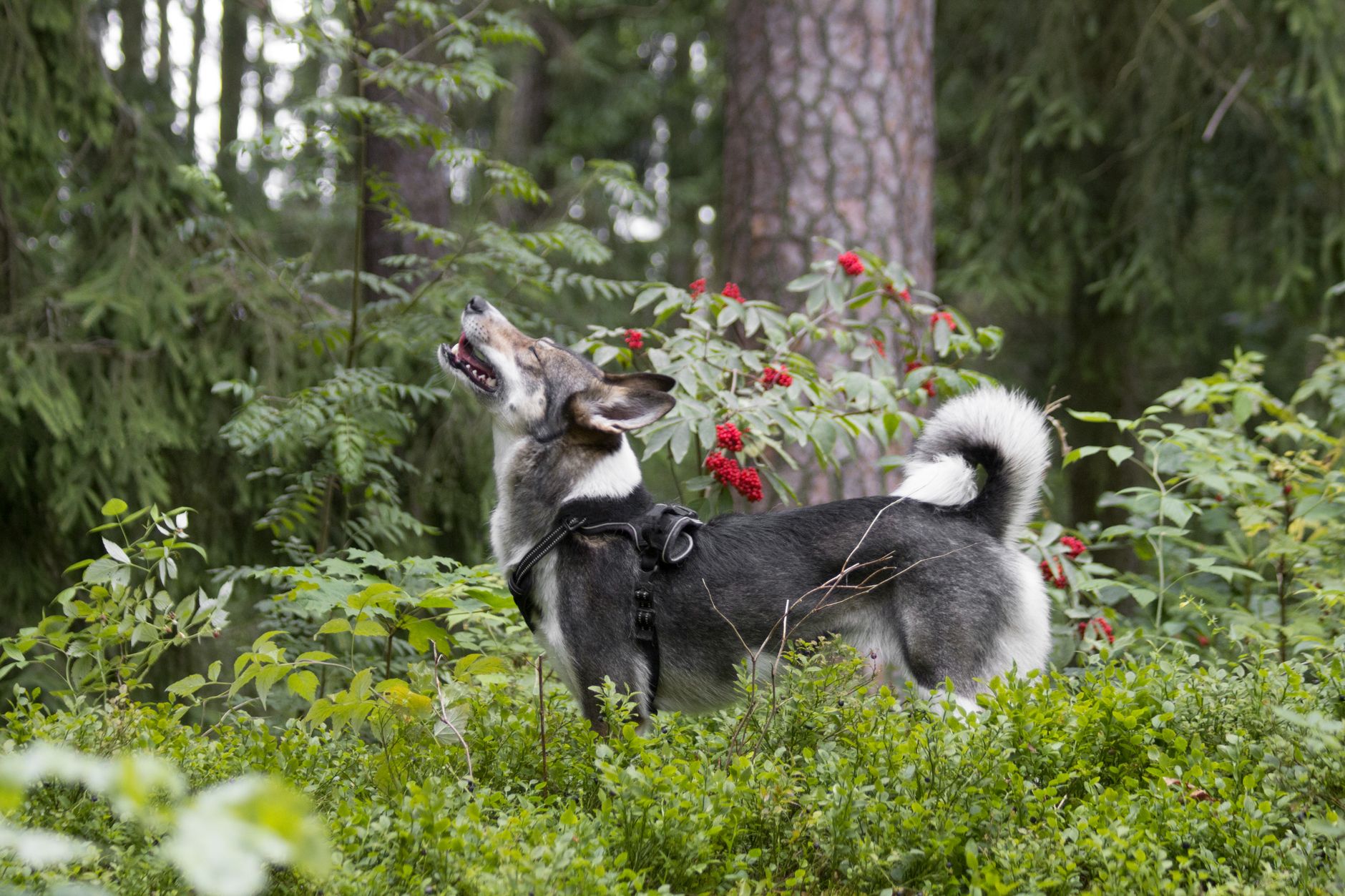
A dog’s tail is one of the most important tools they use to communicate. When a dog holds its tail up, it can indicate confidence, interest, excitement, alertness, or emotional arousal. However, the meaning is not determined by tail position alone. Understanding the entire body language of the dog provides a much clearer picture of what they are feeling.
Dogs communicate primarily through posture, facial expressions, movement, and scent. Because they cannot speak, small changes in tail position often provide valuable clues about their emotional state and intentions.
Why dogs hold their tails up
A raised tail generally means that a dog is experiencing a heightened state of awareness or emotion. This does not automatically mean the dog is happy or aggressive. The context, environment, and other body signals determine the true meaning.
Confidence and comfort
Some dogs naturally carry their tails higher when they feel comfortable in their surroundings. A relaxed dog may walk with an upright tail while exploring, greeting familiar people, or moving through an environment they consider safe.
The body usually appears loose and relaxed in these situations. The ears may be in a natural position, the mouth may be slightly open, and the dog’s movements are smooth rather than stiff.
Excitement or enthusiasm
Dogs often raise their tails when something captures their attention. Seeing their owner, meeting another dog, preparing for a walk, or discovering an interesting smell can all trigger an elevated tail position.
Excitement is usually accompanied by other playful behaviors such as a relaxed posture, energetic movement, play bows, or a wagging tail.
Alertness and curiosity
When a dog notices something unfamiliar, they may raise their tail while evaluating the situation. This helps them appear more confident and may also allow them to spread their scent signals more effectively.
A dog standing still with a high, stiff tail while staring at something may be showing focus rather than friendliness.
A raised tail does not always mean a friendly dog
One of the most common misunderstandings about dog behavior is assuming that every raised tail indicates happiness. In reality, a high and rigid tail can also signal tension, uncertainty, or a warning.
| Tail Position | Possible Meaning |
|---|---|
| High and relaxed | Confidence, interest, or calm alertness. |
| High and stiff | Strong focus, tension, or possible discomfort. |
| High with rapid wagging | High excitement, which may be positive or stressful depending on context. |
| Low or tucked | Fear, anxiety, submission, or uncertainty. |
The importance of tail movement
The way a dog moves its tail can provide additional information. A loose wag involving the entire body often indicates happiness or social interest, while a fast, stiff wag may indicate intense emotional arousal.
Tail speed, direction, body posture, facial expression, and the surrounding situation should always be considered together.
Breed differences affect tail signals
Tail communication is not identical across all dogs. Breed characteristics can influence how a dog naturally carries and moves its tail.
- Some breeds naturally hold their tails high because of their genetics and body structure.
- Breeds with curled tails may display emotions differently from breeds with long, straight tails.
- Dogs with very short tails may rely more heavily on other body signals.
- Individual personality can influence normal tail carriage.
Because of these differences, owners should learn what is normal behavior for their own dog rather than comparing every dog to the same standard.
Reading the whole dog, not just the tail
Experienced dog handlers look at multiple signals before interpreting behavior. A raised tail becomes meaningful only when combined with other signs.
- Ears: Relaxed ears may indicate comfort, while forward-focused or flattened ears may show attention or stress.
- Eyes: Soft eyes often indicate relaxation, while intense staring may signal tension.
- Body posture: A loose body usually suggests comfort, while stiffness can indicate stress.
- Facial expression: Mouth position and overall expression can reveal emotional state.
Why understanding tail language matters
Correctly interpreting dog body language helps prevent misunderstandings between dogs and humans. A person who mistakes a tense, raised tail for friendliness may accidentally approach a dog that needs more space.
Learning these signals is especially important when introducing dogs to children, unfamiliar animals, or new environments.
Final perspective
A dog’s raised tail is a communication signal, not a simple emotional label. It can represent confidence, excitement, curiosity, or tension depending on the situation and the rest of the dog’s body language.
The best way to understand a dog is to observe the complete picture: posture, movement, facial expression, environment, and individual personality. A tail provides valuable information, but it is only one part of the conversation dogs have with the world around them.
“`