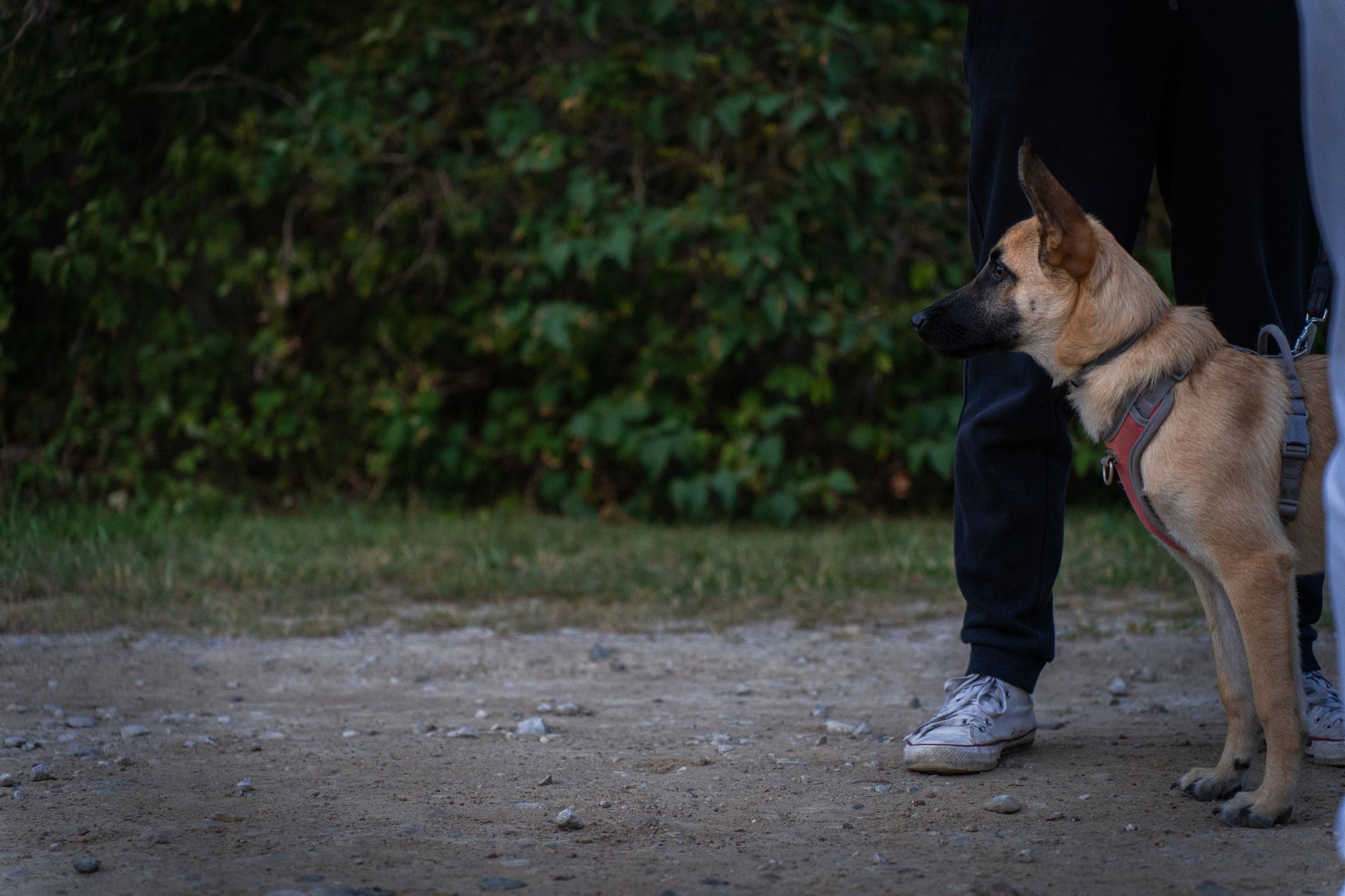
A dog barking at people is one of the most common challenges owners face, but the behavior is often misunderstood. Barking is not simply a bad habit that needs to be eliminated. It is a form of communication that can express excitement, fear, frustration, uncertainty, or a desire to create distance.
The most effective training approach is not to punish the barking itself, but to understand why the dog reacts and teach a different response. A dog that learns how to remain calm around people is not only quieter — it is usually more confident and better able to handle everyday situations.
Whether your dog barks at strangers during walks, reacts to visitors at the door, or becomes vocal whenever someone passes by the house, changing the behavior requires consistency, management, and realistic expectations.
Why Dogs Bark at People
Before training begins, it is important to identify the reason behind the barking. Different motivations require different strategies.
| Reason for Barking | What the Dog May Be Feeling |
|---|---|
| Fear or uncertainty | The dog may be trying to create distance from something it finds threatening. |
| Excitement | The dog may want to greet, interact, or get attention. |
| Territorial behavior | The dog may believe it is protecting its home or family. |
| Frustration | The dog may bark because it cannot reach or interact with the person. |
| Habit | The behavior may have been repeated long enough to become automatic. |
A dog barking at a stranger is not always showing aggression. A wagging tail and forward movement may indicate excitement, while a stiff body, avoidance, growling, or defensive posture may suggest fear or discomfort.
The Biggest Training Mistake: Reacting After the Barking Starts
Many owners wait until their dog is already barking intensely before attempting to intervene. At that point, the dog may be too emotionally overwhelmed to respond well to training cues.
Successful training usually begins earlier — when the dog notices a person but is still calm enough to learn.
The goal is to teach:
- Seeing people does not automatically mean excitement or danger.
- Calm behavior earns rewards.
- The owner provides guidance in unfamiliar situations.
This approach changes the dog’s emotional response instead of only suppressing the noise.
Start With Distance and Control
Distance is one of the most valuable tools when training a dog that barks at people. A dog that is too close to a trigger may not be able to think clearly or respond to commands.
Begin at a distance where your dog can notice a person without immediately barking. Reward calm behavior such as:
- Looking at the person and staying quiet.
- Checking in with you.
- Remaining relaxed on the leash.
- Choosing not to react.
Over time, the distance can gradually decrease as the dog becomes more comfortable.
Use Positive Reinforcement to Build a New Habit
Dogs repeat behaviors that produce results. If barking causes a person to leave, gains attention, or creates excitement, the dog may learn that barking works.
Positive reinforcement changes that pattern by rewarding the behavior you want instead.
Examples include:
- Giving treats when your dog notices a person calmly.
- Praising your dog for looking back at you instead of barking.
- Rewarding quiet behavior during controlled greetings.
- Providing attention after your dog settles down.
The timing matters. Rewards should happen when the dog is calm, not after a long barking episode has already occurred.
Teaching Alternative Behaviors
A dog cannot simply be told what not to do. Training works better when the dog learns what behavior should replace barking.
Useful alternative behaviors include:
- Look at me: teaches the dog to focus on the owner.
- Sit and stay: creates a predictable response around people.
- Go to a place: teaches the dog to move away and settle.
- Leave it: helps interrupt fixation on a person.
These skills are most effective when practiced before the dog encounters a challenging situation.
Managing Barking at Visitors Inside the Home
Dogs often bark at people entering the home because the doorway creates excitement, uncertainty, or territorial feelings.
Helpful strategies include:
- Practice calm door greetings before real visitors arrive.
- Ask guests to avoid overwhelming the dog immediately.
- Reward quiet behavior when the door opens.
- Use a leash, gate, or separate area if needed for safety.
- Avoid allowing repeated barking rehearsals.
Management is not a failure. Preventing unwanted behavior while training is one of the most important parts of long-term improvement.
Why Punishment Often Makes the Problem Worse
Yelling, scolding, or using intimidation may stop barking temporarily, but it does not always address the reason behind the behavior.
For fearful dogs, punishment can increase stress and make people appear even more threatening. For excited dogs, negative attention may still feel rewarding because the dog receives interaction.
A better approach is to teach the dog that calm behavior leads to positive outcomes.
Common Training Approaches That May Not Work
Some methods fail because they focus only on stopping the sound rather than changing the underlying behavior.
| Approach | Potential Problem |
|---|---|
| Only saying “quiet” repeatedly | The dog may not understand what behavior is expected instead. |
| Waiting until the dog explodes | The dog may already be too stressed to learn. |
| Forcing greetings | Can increase fear or discomfort around people. |
| Inconsistent rules | The dog receives unclear feedback about expectations. |
How Long Does It Take to Stop Barking at People?
The timeline depends on the dog, the reason for barking, previous experiences, and how consistently training is practiced.
A dog that learned barking over months or years may not change in a few days. Progress is usually measured through gradual improvements, such as:
- Barking less intensely.
- Recovering more quickly after seeing people.
- Responding to commands sooner.
- Needing less distance from triggers.
Consistency is more important than trying to achieve immediate perfection.
When Professional Help May Be Needed
Some barking problems are simple training issues, while others involve fear, anxiety, or aggressive responses that require professional guidance.
Consider seeking help if your dog:
- Lunges, snaps, or attempts to bite people.
- Cannot calm down after seeing strangers.
- Shows extreme fear around people.
- Becomes difficult to control on walks.
- Has suddenly developed new reactions.
A qualified trainer or veterinary behavior professional can help identify the cause and create a safer training plan.
The Goal Is Not Silence — It Is Confidence
Training a dog not to bark at people is not about forcing a dog to ignore the world. Barking is a natural canine behavior, and some communication is normal.
The real goal is helping your dog make better choices: noticing people without immediately reacting, trusting your guidance, and feeling more comfortable in everyday situations.
With patience, clear expectations, and reward-based training, most dogs can learn that people do not need to trigger excitement or fear. A calmer response begins with understanding what your dog is trying to say.