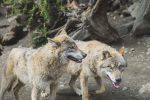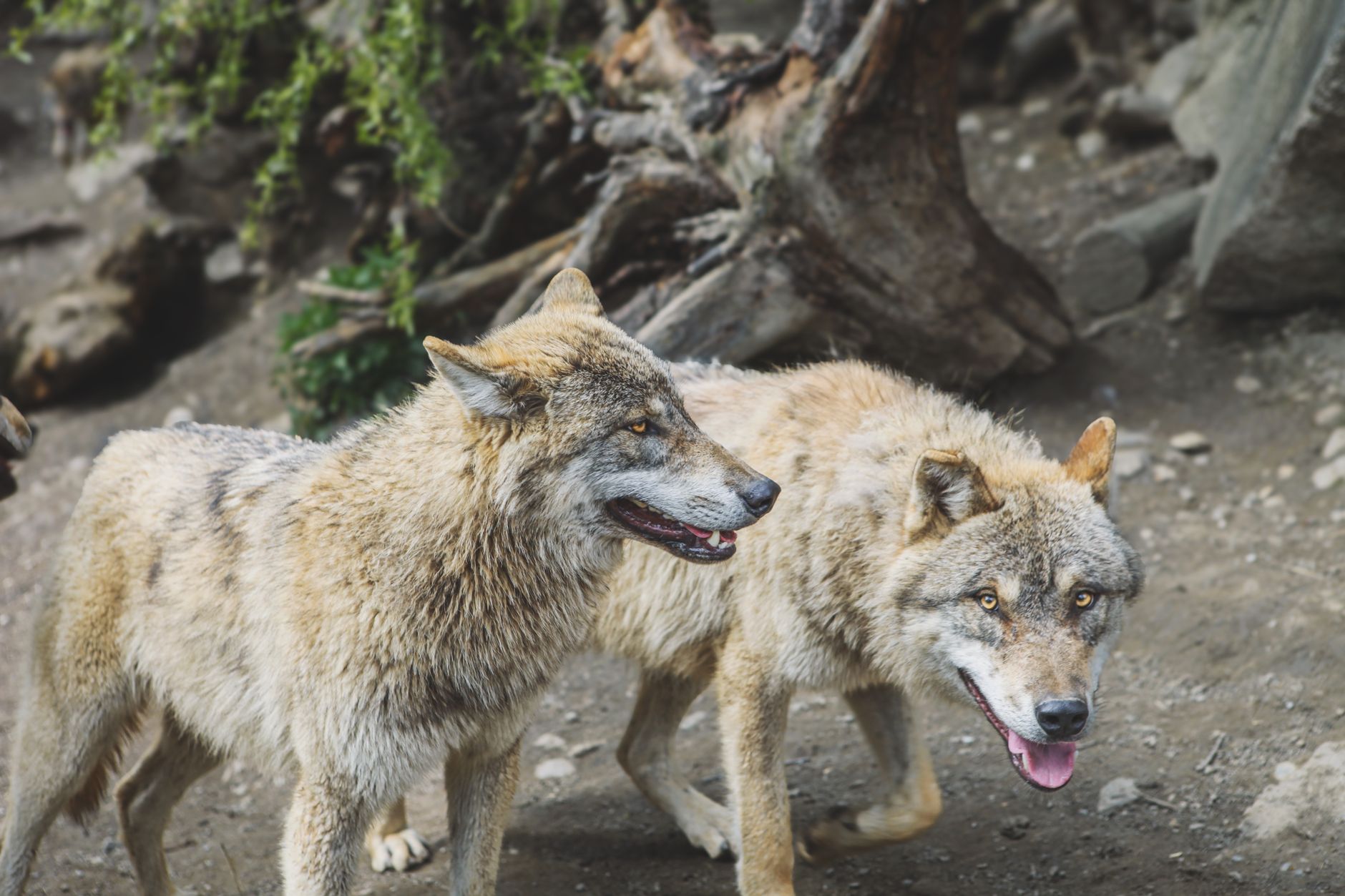
The relationship between humans and dogs is one of the most remarkable partnerships in the history of animals. Today, dogs live beside people as companions, workers, and family members, but their ancestors were very different. Thousands of years ago, they were wild wolves surviving in harsh environments.
The transformation from wolf to dog was not a sudden event. It was a long evolutionary process shaped by natural selection, human interaction, changing environments, and thousands of generations of adaptation.
Modern dogs did not simply come from wolves through training. Instead, dogs and modern wolves share a common ancestor, and the domestic dog lineage developed through a unique relationship between early humans and ancient wolf populations.
The connection between dogs and wolves
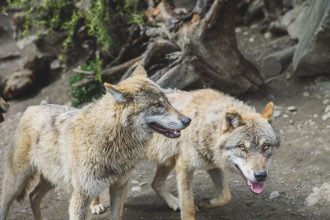
Domestic dogs and gray wolves belong to the same biological family and share many similarities in their anatomy, behavior, and genetics. Scientists classify dogs as Canis lupus familiaris, a subspecies of the gray wolf, Canis lupus.
Their close relationship explains why dogs and wolves can still interbreed and produce fertile offspring. However, thousands of years of domestication have created major differences in behavior, appearance, and how they interact with humans.
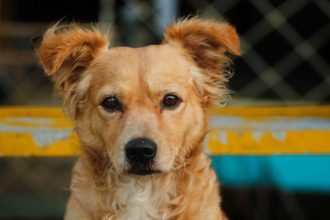
A Chihuahua, a Labrador Retriever, and a Siberian Husky may look completely different, but all domestic dogs carry genetic traces connected to their ancient wolf ancestry.
Where did the first dogs come from?
The exact timeline of dog domestication remains one of the most debated questions in evolutionary science. Genetic studies suggest that dogs began separating from ancient wolf populations tens of thousands of years ago, although researchers continue to refine when and where this process began.
Archaeological evidence shows that humans and early dogs were already living together thousands of years ago. Ancient dog remains have been discovered alongside human settlements, suggesting that the relationship was established long before modern agriculture and organized societies developed.
Instead of one single moment when humans “created” dogs, domestication likely happened gradually through repeated interactions between humans and certain wolf populations.
The first step: some wolves moved closer to humans
Early humans created opportunities for interaction with wolves by producing food waste around camps. Some wolves may have approached these areas because they offered an easier source of food compared with hunting.
The wolves that were less fearful and more tolerant of humans had an advantage. They could stay closer to human settlements without becoming aggressive or fleeing immediately.
Over generations, these calmer wolves were more likely to survive near humans and reproduce. This gradual process changed both their behavior and physical characteristics.
How domestication changed wolves into dogs
Domestication affected many aspects of the animal, including appearance, behavior, and social communication.
Behavioral changes
One of the biggest changes was reduced fear and aggression toward humans. Dogs became better at reading human signals, responding to gestures, and cooperating with people.
Unlike wild wolves that depend primarily on their own social groups, dogs developed a unique ability to form strong bonds with humans.
Physical changes
Domesticated animals often develop physical traits associated with what scientists call domestication syndrome. In dogs, these changes can include differences in coat colors, ear shapes, facial structure, and body size.
The wide variety of modern dog breeds is the result of much later selective breeding by humans, not the original domestication process itself.
Communication changes
Dogs became especially skilled at communicating with humans. Their ability to interpret human attention, emotions, and commands helped strengthen their role as cooperative partners.
This communication ability is one of the clearest differences between dogs and their wild relatives.
Did humans domesticate wolves intentionally?
For many years, scientists debated whether early humans actively captured wolf pups and raised them, or whether wolves gradually domesticated themselves by living near human settlements.
The most widely supported explanation today suggests that domestication was likely a combination of natural and human-driven processes.
Some wolves may have started the relationship by approaching humans for food, while humans later recognized the benefits of having cooperative animals nearby. Over time, both species influenced each other’s survival.
Why humans and early dogs benefited from each other
The relationship between humans and early dogs was likely based on mutual advantage rather than simple human control.
| Humans gained | Dogs gained |
|---|---|
| Help with hunting and tracking | Reliable access to food sources |
| Protection and warning of danger | Safety near human communities |
| Companionship and assistance | Stable social relationships |
This cooperation created a rare evolutionary partnership where two different species adapted to work together.
How modern dog breeds developed
The first domesticated dogs were not divided into hundreds of breeds like they are today. Most early dogs were general-purpose animals that helped humans with survival tasks.
Modern breeds developed much later through selective breeding. Humans intentionally selected dogs with certain traits, such as hunting ability, size, speed, appearance, or temperament.
This selective breeding created specialized breeds, from working dogs and herding dogs to companion breeds.
Are dogs still similar to wolves today?
Dogs still share some instincts with wolves, including social behavior, body language, and certain communication patterns. However, thousands of years of domestication have changed dogs significantly.
A domestic dog is not simply a “tame wolf.” It is a separate form of animal shaped by a long evolutionary partnership with humans.
Wolves are adapted for survival in the wild, while dogs are adapted to live alongside people. Their similarities reveal their shared ancestry, but their differences show the powerful effects of domestication.
What modern genetics tells us about dog evolution
Advances in DNA research have helped scientists understand how dogs changed over time. Genetic comparisons show that dogs and wolves share a close evolutionary history, while also revealing how domestication altered specific genes linked to behavior, diet, and development.
Research continues to explore unanswered questions, including exactly which wolf populations contributed to modern dogs and how many times domestication may have occurred in different regions.
The lasting legacy of the wolf-dog relationship
The evolution of dogs from ancient wolf ancestors is not just a story about biology. It is a story about cooperation between two species that changed each other’s futures.
Humans helped shape dogs through care, breeding, and selection, while dogs helped humans hunt, protect communities, and build emotional connections that continue today.
Every dog living in a home today carries a piece of that ancient history. Behind every wagging tail and familiar face is a story that began with a wild animal choosing to come closer.
“`