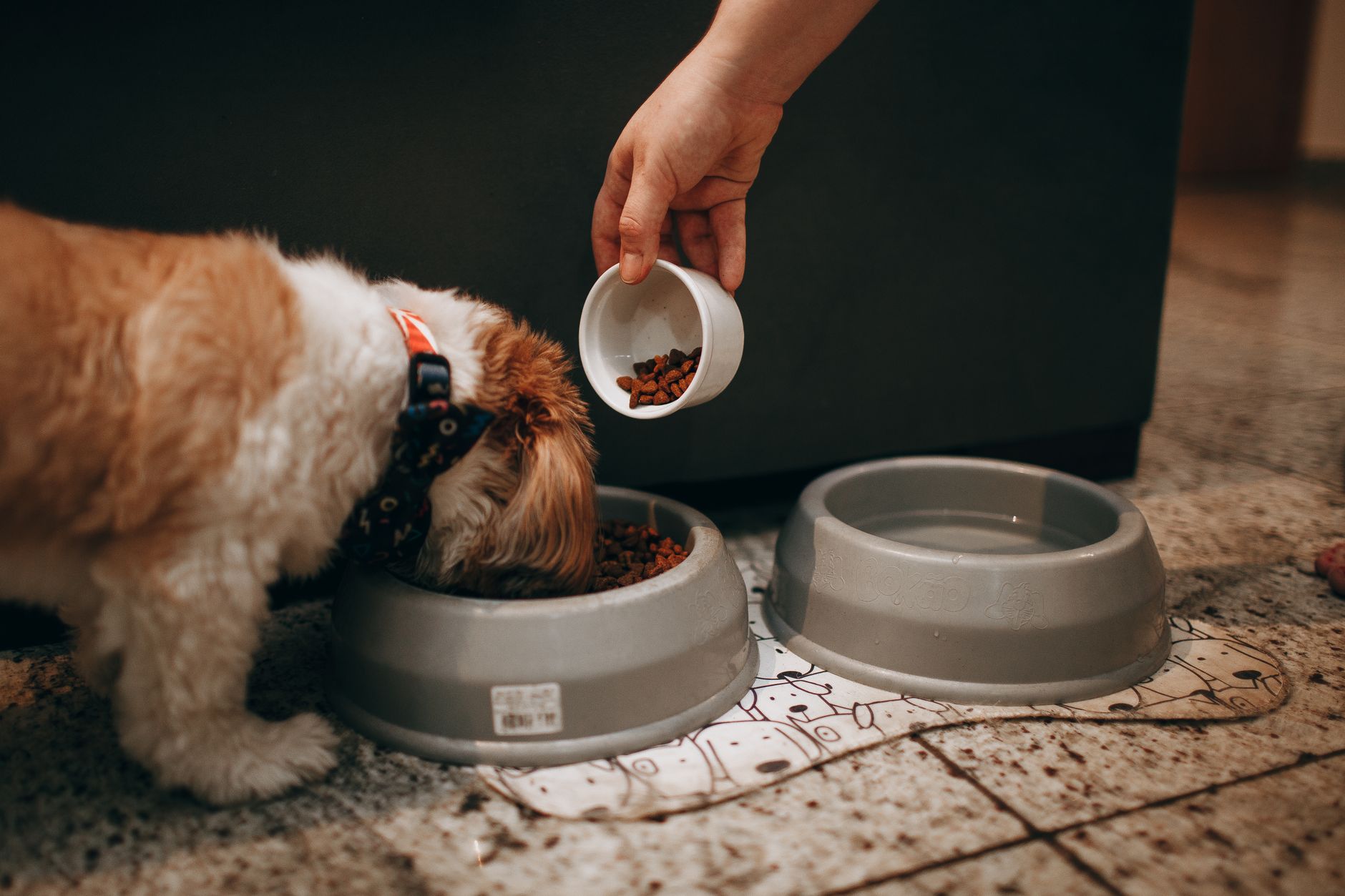
A dog skipping a meal is not automatically a medical emergency. Dogs can eat less because of a change in routine, stress, medication, food quality, or simple changes in appetite. However, a noticeable loss of interest in food can also be an early sign that something is wrong.
The important question is not simply “why did my dog stop eating?” but “what else has changed?” Appetite needs to be considered alongside your dog’s age, health history, behavior, drinking habits, bowel movements, and any other symptoms.
First, Work Out What “Not Eating” Actually Means
There is an important distinction between a dog that has no appetite and one that wants to eat but cannot.
Veterinary professionals may describe these situations as true anorexia and pseudo-anorexia. A dog with true anorexia has reduced interest in food. With pseudo-anorexia, the dog may still be hungry but has difficulty picking up, chewing, swallowing, or otherwise consuming the food.
This distinction can change what a veterinarian looks for. A dog approaching its bowl, attempting to eat, and then backing away may have a very different problem from a dog that completely ignores food.
Medical Problems Are One of the Main Reasons Dogs Stop Eating
Reduced appetite is a common clinical sign rather than a diagnosis in itself. Many different conditions can cause it, which is why persistent appetite loss should not automatically be treated as a behavioral issue.
Possible medical explanations include:
- Gastrointestinal illness
- Infections
- Pain or discomfort
- Dental or oral problems
- Kidney or liver disease
- Metabolic disorders
- Pancreatic or digestive problems
- Medication side effects
- Intestinal obstruction or another gastrointestinal problem
- Other systemic diseases
Digestive disorders can be accompanied by several other signs, including vomiting, diarrhea, abdominal pain, dehydration, weight loss, and changes in bowel movements.
Sometimes the Problem Is Not Hunger but Eating
A dog can appear uninterested in food when the real difficulty occurs after it approaches the bowl.
Problems involving the mouth, teeth, jaw, throat, or swallowing mechanism can make eating uncomfortable or physically difficult. In that situation, simply offering tastier food may not solve the underlying problem.
Watch what happens during mealtime. If your dog seems interested in food but drops pieces, struggles to chew, has difficulty swallowing, or repeatedly approaches and then abandons the bowl, tell your veterinarian exactly what you observed.
A New Medication Can Change Your Dog’s Appetite
If your dog stopped eating shortly after starting a medication or changing its dosage, the timing is worth discussing with the veterinarian who prescribed it.
Some medications can cause nausea, stomach upset, or other effects that reduce food intake. Appetite changes therefore need to be interpreted in the context of the dog’s treatment rather than viewed as an isolated feeding problem.
Do not stop a prescribed medication on your own simply because your dog is eating less. Contact the prescribing veterinarian and explain what has changed.
Stress and Changes at Home Can Affect Eating
Not every appetite change has a physical cause. Dogs can respond to significant environmental or social changes, including moving house, changes in household members, altered routines, or other stressful events.
A dog that has recently experienced a major disruption may temporarily show less interest in food. Veterinary guidance also recognizes social and emotional changes as potential contributors to reduced appetite.
Look for other behavioral changes at the same time. Increased hiding, restlessness, unusual vocalization, changes in sleep, or reluctance to participate in normal activities can provide useful context.
Some Dogs Eat Differently When Their Owner Is Away
Meal behavior can also be influenced by the dog’s environment. Some dogs eat poorly when their usual person is absent but become interested in food again when that person returns.
If your dog consistently refuses food only under particular circumstances, keep a record of when the behavior happens. A pattern can help distinguish a situational feeding issue from a broader loss of appetite.
Do Not Ignore the Food Itself
Before assuming that a dog has developed a medical problem, inspect the food you are serving.
Food can become less appealing if it is stale, improperly stored, or has developed an unusual smell. This can be especially relevant when a large bag of dry food has been open for a long time. Veterinary guidance notes that purchasing an appropriately sized quantity and storing food correctly can help prevent deterioration.
Check:
- The expiration or best-before information
- Whether the packaging has been damaged
- Whether the food smells or looks different
- Whether the recipe or formulation has recently changed
- Whether the food has been stored according to the manufacturer’s instructions
If you suspect a problem with commercial pet food, keep the original packaging and product information. These details can be useful when discussing the issue with your veterinarian or investigating a possible food-safety concern.
Why Does My Dog Stop Eating but Still Want Treats?
A dog that refuses its regular meal but eagerly accepts treats may be dealing with food preference, feeding habits, or a medical issue. The behavior alone does not establish the cause.
Frequent treats and table food can also reduce interest in regular meals. If a dog repeatedly learns that ignoring its normal food leads to something more appealing, mealtime preferences can become increasingly difficult to interpret.
However, do not assume that a dog is simply being picky if the change is sudden. A previously reliable eater that suddenly refuses normal food deserves closer observation, particularly if the behavior continues.
Look at the Whole Dog, Not Just the Food Bowl
The most useful information for a veterinarian is often what happens alongside the appetite change.
| What you notice | Why it matters |
|---|---|
| Vomiting | Can accompany gastrointestinal or other systemic problems. |
| Diarrhea | May indicate digestive illness, infection, dietary problems, or other conditions. |
| Lethargy | A significant reduction in normal activity can suggest that the appetite change is part of a broader illness. |
| Weight loss | Persistent inadequate food intake can contribute to weight loss, while underlying disease can also cause both problems. |
| Excessive thirst or urination | Changes in drinking or urination can provide important clues about underlying disease. |
| Abdominal pain or bloating | Can be associated with gastrointestinal problems, including potentially serious conditions. |
| Difficulty eating | May point toward dental, oral, swallowing, or other physical problems rather than lack of hunger. |
For example, appetite loss accompanied by vomiting, diarrhea, lethargy, dehydration, or abdominal symptoms is more concerning than a single missed meal in an otherwise normal-acting dog.
When Should You Call the Veterinarian?
There is no single number of hours that applies equally to every dog. Age, size, medical history, medications, and existing conditions all matter.
Veterinary guidance from VCA recommends prompt evaluation when a pet has decreased appetite, refuses food, or appears painful while eating; its urgent-care guidance specifically lists more than 12 hours without eating as a reason to seek evaluation.
AKC veterinary guidance similarly recommends contacting a veterinarian when a dog goes beyond a short period without eating, with particular concern when appetite loss is accompanied by other symptoms or represents a marked change from the dog’s normal pattern.
Do not wait for a standard timeframe if your dog is seriously unwell. Seek urgent veterinary care for signs such as collapse, seizures, difficulty breathing, severe weakness, significant bleeding, or suspected poisoning.
Some Dogs Need Faster Attention Than Others
A missed meal has different implications depending on the individual dog. A healthy adult dog with no other symptoms is not necessarily in the same situation as a puppy, elderly dog, diabetic dog, or animal with an existing medical condition.
For example, VCA specifically advises urgent evaluation when a diabetic animal refuses even one meal.
This is why advice based solely on the number of skipped meals can be misleading. Your dog’s medical history is part of the assessment.
What You Can Record Before Calling the Vet
A short record can make a veterinary consultation more useful. Note:
- When your dog last ate a normal meal.
- Approximately how much food was consumed.
- Whether treats or other foods are still being accepted.
- Whether your dog is drinking normally.
- Any vomiting or diarrhea.
- Changes in urination or bowel movements.
- Changes in energy, behavior, or mobility.
- Any recent medication, diet, household, or routine changes.
- Anything unusual your dog may have eaten.
If there is a possibility that your dog swallowed a foreign object, appetite loss accompanied by vomiting, abdominal discomfort, weakness, bloating, or other digestive signs deserves particular attention because gastrointestinal blockages can be emergencies.
Should You Keep Changing Your Dog’s Food?
Repeatedly switching foods is not always the best response to appetite loss. If the underlying problem is nausea, pain, medication side effects, gastrointestinal disease, or another medical condition, a different flavor may temporarily change eating behavior without addressing the cause.
Likewise, adding increasingly rich foods can make the diet harder to manage and may introduce additional digestive problems.
If a veterinarian determines that there is no medical problem and your dog is simply selective about food, then diet preferences can be addressed more systematically. Until that point, a sudden appetite change should be treated as information rather than simply as stubborn behavior.
Why Persistent Appetite Loss Should Not Be Dismissed
Food intake is closely connected with a dog’s nutritional status. Prolonged inadequate intake can contribute to weight loss and can become more significant when another disease is already present. Veterinary literature identifies anorexia as a common clinical sign across many systemic disorders.
Unintentional weight loss is also important. Veterinary guidance considers weight loss clinically significant when it exceeds 10% of normal body weight, although the speed of the loss and the individual dog’s circumstances also matter.
In other words, a dog that repeatedly eats less than normal should not be evaluated only by whether it looks hungry at dinner.
The Practical Takeaway
There are many answers to the question “why does my dog stop eating?” Some are relatively straightforward, such as food quality, changes in routine, stress, or temporary appetite variation. Others involve illness, pain, medication effects, dental problems, gastrointestinal disease, or potentially serious conditions.
The safest approach is to look for the pattern behind the behavior. A single missed meal in an otherwise healthy, normal-acting dog may not mean the same thing as persistent food refusal accompanied by vomiting, diarrhea, lethargy, pain, weight loss, or changes in drinking.
If your dog’s appetite has changed significantly, the change persists, or other concerning symptoms appear, contact a veterinarian rather than relying on repeated food changes or home remedies. Appetite is one of the simplest daily health signals to observe, and noticing a meaningful change early can give your veterinarian valuable information about what may be happening.